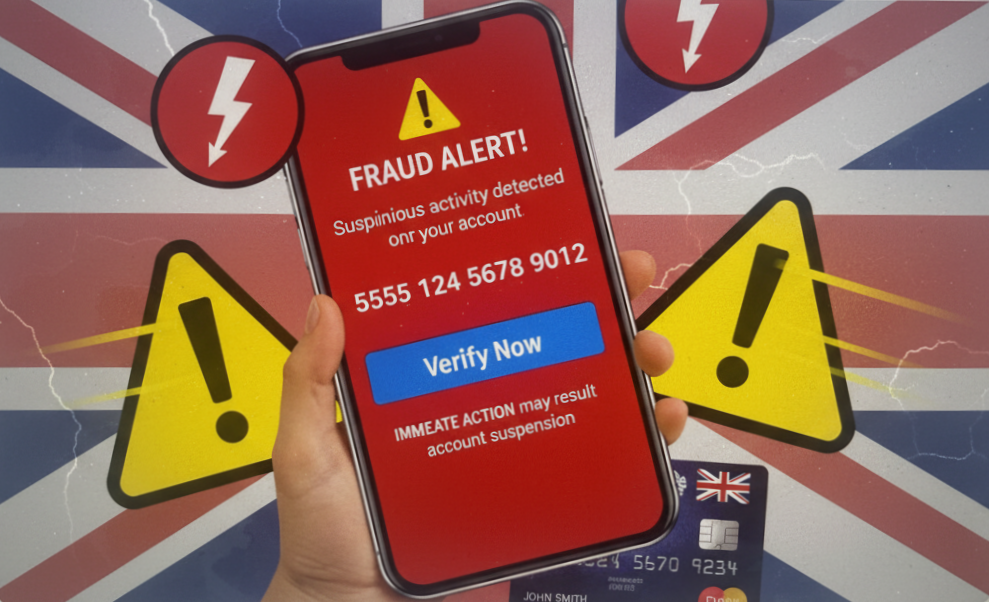
If you’ve ever received an email promising a life-changing investment opportunity — one that sounds almost too good to be true — you’re not alone. These messages land in the inboxes of millions of people every single day. And knowing how to spot an investment scam before you part with your money is one of the most valuable things you can do to protect your retirement savings.
The scary truth is that investment scams stole more than £612 million from UK victims in just the first half of 2025. And the people most often targeted? Those aged 55 and over — because scammers know that pensioners are more likely to have savings, own their homes, and be at home to answer the phone or read their emails.
But here’s something that surprises many people: some of the most common tricks used by fraudsters are also used by perfectly legitimate — and well-known — financial companies. The same psychological pressure. The same sense of urgency. The same dazzling promises. Once you know how to spot an investment scam — whether it comes from a criminal or a slick marketing department — you’ll be much harder to fool.
In this article, I’ll walk you through seven clear warning signs to help you how to spot an investment scam a mile off — explained in plain English, no financial jargon — so you’ll know exactly what to look out for.
| 📊 THE SCALE OF THE PROBLEM IN THE UK |
| • Over £612 million lost to investment fraud in the first half of 2025 (MoneyHelper) • Investment fraud cases jumped 55% in a single year • People aged 55–64 were the worst-hit group, losing more than £133 million • The average victim loses around £25,000 • 66% of investment scams now start on social media |
Sign 1: They Won’t Tell You What the Investment Actually Is
Imagine receiving an email that talks about a ‘revolutionary technology’ worth ‘$30 trillion’ — backed by Amazon, Tesla, and Warren Buffett — but never actually tells you what it is. You have to pay to find out.
This is called a mystery teaser, and it’s one of the most powerful tricks in the book. By keeping the secret hidden, the writer creates a burning curiosity that can cloud your judgement. You’re so focused on finding out what the investment is that you stop asking whether you even need it.
The Financial Conduct Authority (FCA) warns that scammers are expert at making opportunities seem urgent and exclusive before you’ve had time to think clearly. A mystery teaser is designed to do exactly that.
What to ask yourself
If this opportunity is so amazing, why is it hidden behind a paywall? One of the simplest ways how to spot an investment scam is this: any investment worth your money should be able to explain itself clearly, upfront, and without you paying a penny first.
Sign 2: There’s a Deadline That’s Creating Panic
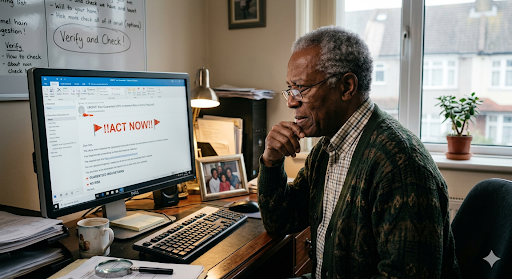
Knowing how to spot an investment scam often comes down to one simple question: why the rush? ‘Offer ends midnight tonight.’ ‘This deal expires in 24 hours.’ ‘Last chance — don’t miss out.’
Sound familiar? Creating a false sense of urgency is one of the oldest tricks in financial marketing. The whole point is to stop you taking the time to think, talk to someone you trust, or do a bit of research. A rushed decision is exactly what a scammer needs.
Now, here’s the important bit. Artificial deadlines aren’t only used by fraudsters. Legitimate financial newsletter companies use them all the time. The difference is that with a genuine company, the product almost always remains available after the deadline — often at the same price. The urgency is manufactured.
As Age UK’s guidance on investment scams clearly states, any company that pressures you with time-limited offers — especially ones that offer a bonus or discount for acting before a set date — should immediately raise a red flag.
What to do
Walk away. Sleep on it. Come back in 48 hours. If the deal has genuinely expired and a new one instantly appears at the same price, you know the deadline was never real.
Sign 3: Famous Names Are Being Dropped to Impress You
‘Warren Buffett believes this technology will change the world.’ ‘Elon Musk says it will create the first trillionaire.’ ‘Even the King has been talking about it.’
Dropping big names is a classic way to make an investment pitch feel credible and exciting. And it works — because if someone like Warren Buffett is involved, it must be legitimate, right?
Not necessarily. In genuine scams, celebrities are often used without their knowledge or permission. Deepfake videos of Martin Lewis, Elon Musk and others have been used to promote bogus investments across Facebook and YouTube. The FCA received nearly 5,000 impersonation reports in just the first half of 2025.
Even when a name-drop is technically accurate — for example, a billionaire once made a vague positive comment about artificial intelligence — the quote is almost always stripped of context, exaggerated, or used to imply an endorsement that simply doesn’t exist.
What to do
One of the easiest ways how to spot an investment scam involving celebrity names is a quick search: the celebrity’s name plus the investment topic. Check the FCA Warning List at fca.org.uk/scamsmart to see if the company has already been flagged. If a famous person genuinely backed an investment, you’d be able to find clear, independent evidence of it.
Sign 4: The Numbers Sound Extraordinary
‘This market will be worth $30 trillion.’ ‘Returns of 350% guaranteed.’ ‘Analysts predict 4,000% growth by 2030.’
Enormous figures are designed to make you feel like you’re standing on the edge of a once-in-a-lifetime opportunity. Miss this, and you’ll regret it for the rest of your life. That fear — known as FOMO, or the Fear of Missing Out — is a very human emotion, and scammers exploit it expertly.
The reality? These figures are almost always plucked from a single optimistic report, stripped of all the caveats, and presented as fact. ‘Guaranteed returns’ are an immediate red flag — in the real world, no investment can ever guarantee a profit. Anything claiming otherwise is either misleading or dishonest.
As Hargreaves Lansdown’s security guidance puts it, ‘once-in-a-lifetime’ language is specifically designed to push you into acting before you’ve thought things through.
What to do
When learning how to spot an investment scam, always ask: where does that figure come from? If there’s no credible, named source — or if you can’t find the original report — treat the number as a marketing invention rather than a financial fact.
Sign 5: They Only Show You the Winners
Another useful way how to spot an investment scam — or at least a misleading pitch — is to notice what’s missing. ‘Our top pick returned 657% since 2013.’ ‘This stock we recommended is up 358%.’ Investment promotions love to show off their biggest successes. What they never show you is the full picture — all the recommendations that went sideways, or simply didn’t perform.
This is called survivorship bias, and it’s one of the most deceptive — yet entirely legal — tactics in financial publishing. By showing only the stocks that went up, a service can look spectacularly successful even if the majority of its picks were average or worse.
In genuine fraud, past performance figures are often completely made up. But even with legitimate companies, cherry-picked results can paint a very misleading picture. You’d never buy a car based on the manufacturer only telling you about the journeys that went smoothly.
What to do
Before paying for any investment service, ask to see the full audited track record — not just the highlights. What percentage of picks were profitable? What was the average return across all recommendations? If that information isn’t freely and clearly available, that tells you something.
Sign 6: It’s ‘Exclusive’ and Available Only to a Select Few
‘This report is privately published and only available to members.’ ‘I’m only sharing this with a small group of trusted investors.’ ‘You’ve been specially selected.’
We all like to feel special. Exclusivity is a powerful psychological trigger — if something is hard to get, it feels more valuable. Scammers use this constantly. And so do legitimate marketing teams.
The truth is that most ‘exclusive’ investment reports are simply PDFs sent to everyone who buys a newsletter subscription. The ‘privately published’ report available to ‘members only’ is about as exclusive as a supermarket loyalty card.
But genuine fraudsters go further. As Citizens Advice has documented, some scammers tell victims to keep the investment secret ‘to protect the promised returns’. This tactic is designed to cut you off from friends and family who might spot the warning signs. No legitimate company will ever ask you to keep your investment private.
What to do
If you’re asked to keep an investment secret — for any reason — stop all contact immediately and report it to Action Fraud on 0300 123 2040. Secrecy in investing is never a feature. It’s always a red flag.
Sign 7: The Testimonials Can’t Be Checked
‘Scott and the team have made an enormous difference in my life. I haven’t needed to work for some years.’ — David, South Australia.
A glowing testimonial from a real person is powerful social proof. It says: this worked for someone just like you. But unless you can independently verify who that person is, what they invested, and what return they actually received, a testimonial tells you almost nothing.
In genuine scams, testimonials are routinely fabricated. In legitimate marketing, they’re carefully selected — you’ll never see the testimonial from the subscriber who lost money, or the one who cancelled after three months feeling disappointed.
As the FTC’s consumer guidance on investment scams notes, scammers commonly invent success stories to make their schemes appear credible. The same technique — selecting only the best stories — is also standard practice in perfectly legal financial marketing.
What to do
If you’re genuinely unsure how to spot an investment scam from a legitimate opportunity, start with the testimonials. Look for independent reviews on platforms like Trustpilot or Google Reviews. Search the company name alongside words like ‘complaint’, ‘refund’, or ‘disappointed’. A first name and a location is not verification — it’s decoration.
| ⚠️ LEGITIMATE COMPANY OR OUTRIGHT SCAM? HERE’S HOW TO TELL |
| A legitimate, FCA-regulated company will: ✓ Be listed on the FCA Register at register.fca.org.uk ✓ Provide a cooling-off period so you can change your mind ✓ Show a full business address and landline number ✓ Never ask you to keep your investment secret ✓ Provide a full track record on request — not just the winners A scam will typically: ✗ Have no FCA registration number — or use a cloned one ✗ Ask for payment via cryptocurrency, gift cards, or bank transfer abroad ✗ Pressure you to move pension money quickly ✗ Go silent or make excuses once you’ve paid ✗ Only show a mobile number or PO Box as contact details |
How to Check Any Investment Offer — Step by Step
Now you know how to spot an investment scam from the warning signs, here’s the practical side. Before you commit a single penny to any investment, work through these five steps. It only takes a few minutes and could save you a fortune.
- Check the FCA Register. Go to register.fca.org.uk and search for the company name. Every firm legally allowed to offer financial services in the UK must be listed. If they’re not there, walk away.
- Check the FCA Warning List. The FCA ScamSmart tool lists firms already known to be operating illegally. A quick search takes 30 seconds.
- Search Companies House. Visit find-and-update.company-information.service.gov.uk to check whether the company is properly registered, who runs it, and how long it’s been trading.
- Call MoneyHelper for free advice. MoneyHelper offers free, impartial guidance on 0800 011 3797. They’re not trying to sell you anything — they’re there to help.
- Give yourself 72 hours. There is no legitimate investment that genuinely requires a same-day decision. Sleep on it, talk to a trusted friend or family member, and come back with fresh eyes.
What to Do If You Think You’ve Been Targeted
If something doesn’t feel right — or if you’ve already sent money — act quickly. Here’s what to do:
- Stop all payments immediately and do not send any more money, even if you’re told your existing investment depends on it.
- Contact your bank straight away. They may be able to stop or reverse a transfer, but time is critical.
- Report it to Action Fraud on 0300 123 2040 or online at actionfraud.police.uk.
- Report the company to the FCA on 0800 111 6768.
- Get free support from Citizens Advice — particularly if you’ve lost money and need help understanding your options.
- Be wary of ‘recovery room’ scams. If someone contacts you offering to recover your lost money — often for an upfront fee — this is almost certainly another scam targeting people who’ve already been defrauded.
More Ways to Protect Yourself on Honest Pensioner
Investment fraud is just one of many ways scammers try to target people in later life. If you want to know more about how to spot an investment scam in specific contexts, take a look at our in-depth guides to phone scams targeting pensioners and bank account scams in the UK. If you’re worried about your finances more broadly, our guides to Pension Credit and Attendance Allowance explain benefits you may be entitled to. And if you’d like to put a trusted person in charge of your finances for peace of mind, our guide to Lasting Power of Attorney is well worth a read.
Your Questions Answered
Question: Is every investment newsletter a scam?
Answer: No, not at all. Many investment newsletters are run by legitimate, FCA-regulated companies with genuine track records. The issue is that even legitimate companies use high-pressure marketing tactics — artificial deadlines, celebrity name-drops, mystery teasers — that are identical to those used by fraudsters. That’s why knowing how to spot an investment scam matters even with well-known names. Always check the FCA Register before handing over any money, regardless of how professional a company looks.
Question: How do I know if an investment company is properly regulated?
Answer: The quickest way to check how to spot an investment scam or a fake company is to search the name on the FCA Register at register.fca.org.uk. Every firm that’s legally allowed to offer financial services in the UK must be listed there. You can also check the FCA Warning List for firms that have already been flagged as operating without permission.
Question: What are the biggest giveaways that something is an investment scam?
Answer: The clearest warning signs when working out how to spot an investment scam are: pressure to make a quick decision, promises of guaranteed high returns, being asked to keep the investment secret, no FCA registration number, and requests for payment via cryptocurrency or money transfer. If you’re contacted completely out of the blue about an investment opportunity — whether by phone, email, or social media — treat it with extreme caution.
Question: I’ve already sent money and I think it might be a scam. What should I do?
Answer: Act immediately. Call your bank to try to stop or reverse the payment, then report to Action Fraud on 0300 123 2040. You can also report the company to the FCA on 0800 111 6768. Citizens Advice can help you understand your options. And be very wary if someone contacts you afterwards offering to get your money back — this is a common follow-up scam. For more guidance on how to spot an investment scam in future, bookmark this page and share it with anyone you think could benefit.
The Bottom Line
Investment scams have become more sophisticated, more professional-looking, and harder to spot an investment scam than ever before. But the underlying tricks haven’t really changed: manufacture urgency, create exclusivity, drop impressive names, and keep the pressure on until you act.
The single most powerful thing you can do is give yourself time. Real opportunities don’t evaporate at midnight. Good investments don’t require you to decide before you’ve spoken to anyone. And no one who genuinely wants to help you with your money will ever ask you to keep it a secret.
If something lands in your inbox that makes your heart race with excitement or anxiety — pause. Use what you’ve learned here about how to spot an investment scam. Check the FCA Register, call MoneyHelper on 0800 011 3797, and talk to someone you trust before doing anything else. Your retirement savings deserve that much care.
| ✅ YOUR QUICK CHECKLIST — BEFORE YOU ACT ON ANY INVESTMENT OFFER |
| Use this checklist whenever you receive an investment approach you’re unsure about: |
- Is the company on the FCA Register? (register.fca.org.uk)
- Have I checked the FCA Warning List?
- Have I been given time to think — without being rushed?
- Can I verify the testimonials and track record independently?
- Have I spoken to someone I trust — a friend, family member, or adviser?
- Am I being asked to keep this investment secret? (If yes — stop immediately)
- Is payment going to a named UK business account at a regulated bank?
Mark Aucamp is the founder of Honest Pensioner and a former mortgage broker with 15 years of experience in financial services. He has appeared as a financial commentator on BBC Sunday Breakfast. This article is for information purposes only and does not constitute financial advice. Always seek independent financial advice before making investment decisions.