Making a will in retirement is one of the most important things you will ever do — and one of the easiest to get disastrously wrong. Most people assume it is straightforward. Write down who gets what, sign it, job done. The reality is very different. A will that looks perfectly reasonable on a quiet Tuesday afternoon can fall apart under the weight of real life: an unexpected death, a divorce, a change in the law, or simply a witness who should not have been in the room. The consequences are not just administrative inconveniences. They can cost your family tens of thousands of pounds, destroy relationships, and leave your wishes ignored entirely.
In this guide, we walk through the 7 most dangerous consequences of getting your will wrong in retirement — and explain exactly why Honest Pensioner always recommends using a qualified will writer. Your circumstances are unique. What works perfectly for one person can be catastrophic for another. A qualified professional understands that. A template does not.
The good news is that making a will in retirement does not have to be complicated — but it does need to be done properly.
| 📊 The Scale of the Problem Around 60% of UK adults do not have a will in place. Of those who do, a significant proportion have written their own — and many of those wills contain errors that will only come to light after they have died, when it is too late to fix them. Families without a valid will lose an average of £9,700 in assets to legal complications, disputes, and intestacy proceedings. |
Why Making a Will in Retirement Matters More Than at Any Other Stage of Life
Retirement is a time when estates are at their most complex. You may own property, hold savings and investments, have pension funds, own shares or physical assets, and have family relationships — second marriages, stepchildren, grandchildren — that do not fit neatly into a standard template. The stakes are higher than they were at 35, and the consequences of getting it wrong are proportionally greater.
If you die without a valid will, the rules of intestacy decide who inherits your estate. Those rules follow a rigid legal hierarchy that takes no account of your relationships, your wishes, or the people you actually love. Unmarried partners — however long you have been together — receive nothing. Stepchildren you have raised as your own may be excluded entirely. And if no qualifying relatives exist, your estate passes to the Crown.
For a full picture of what happens without a will, read our guide: 7 Shocking Things That Happen When You Die Without a Will in the UK.
The Honest Pensioner Position: Why We Always Recommend a Qualified Will Writer
You can write your own will. It is entirely legal. DIY will templates cost anywhere from nothing to around £50, and online services offer guided versions for £50 to £150. For the very simplest of estates — one person, one beneficiary, no complications — a well-completed DIY will may be adequate.
But here is the thing we have learned from years of working in financial and estate planning: most people’s estates are not that simple. And most people do not know their estate is complicated until a professional sits down with them and starts asking questions.
| 💡 Honest Pensioner Recommends Writing your own will is a bit like doing your own electrical wiring. Technically legal, occasionally fine — but one mistake you cannot see can cause devastation later. Everyone’s family situation, assets, and wishes are different. A qualified will writer takes the time to understand yours. We always recommend using a qualified professional. Look for a member of the Society of Will Writers or the Institute of Professional Willwriters, both of which operate approved codes of practice. Alternatively, a solicitor who is a member of the Law Society’s Wills and Inheritance Quality Scheme provides an additional layer of regulatory protection. |
7 Dangerous Consequences of Getting Your Will Wrong in Retirement
1. Your Will Is Declared Invalid — and Intestacy Decides Everything
This is the consequence that frightens people most — and rightly so. When making a will in retirement, failing to meet the precise legal requirements of the Wills Act 1837 does not produce an imperfect will. It produces a worthless one. Your estate then passes under intestacy rules as though you never wrote a will at all.
For a will to be legally valid in England and Wales, it must be in writing, signed by you in the presence of two witnesses who are both present at the same time, and signed by those witnesses in your presence. All three of you must be in the same room. The witnesses must be over 18, of sound mind, and — critically — must not be beneficiaries or the spouse of a beneficiary.
| ⚠️ The Witness Trap — A Real-Life Warning In 2023, a woman left her entire estate to her two adult children and asked them both to witness her will. The will was legally valid — but under Section 15 of the Wills Act 1837, both gifts to her children were automatically void. Her estate passed to other relatives under intestacy. Everything she had planned was undone by a single, easily avoidable mistake. |
Important note: Remote witnessing via video call was temporarily permitted during the Covid-19 pandemic, but that provision ended in January 2024. All witnesses must now be physically present in the same room.
2. Your Unmarried Partner Inherits Nothing
One of the most common and heartbreaking consequences of either no will or an improperly written one. There is no such thing as a ‘common law spouse’ in English law. An unmarried partner has no automatic right to inherit — regardless of how many years you have been together, whether you share a home, or whether they depend on you financially.
This catches a significant number of people in retirement, where second relationships after divorce or bereavement are common. Making a will in retirement that specifically names your partner is the only way to protect them. Without a valid will doing exactly that, they could lose everything. For more on this, read our guide: Common Law Partner Rights After Death UK.
3. The Wrong Person Acts as Executor — and Creates Chaos
Your executor is the person legally responsible for carrying out your wishes. They collect your assets, pay your debts and taxes, deal with probate, and distribute your estate. It is a significant responsibility that can take months — sometimes years — to complete. Choosing the right executor is one of the most underestimated decisions in making a will in retirement.
Many people appoint executors without thinking through whether those people are actually able to do the job. An executor who is elderly themselves, who lives abroad, who has since had a falling-out with other family members, or who simply cannot cope with paperwork can cause enormous delays and conflict.
You can appoint between one and four executors. Appointing two is usually advisable — if one cannot act, the other can continue without legal complications. Always ask the people you have in mind before naming them. Being an executor is not an honour; it is a job, and a demanding one.
4. A £1 Million Estate — Almost Nothing Left: A Real Story
Early in my career as a will and trust adviser, I visited a couple in their 80s. Their estate — home, shares, and savings — was worth approximately £1 million. They had one daughter and wanted everything to go directly to her, bypassing each other entirely.
I recommended a different structure: changing the property ownership to tenants in common, with each partner’s share passing into a life interest trust on first death. This would protect the deceased partner’s share from care fees, while the surviving partner continued to live in the home. A clean, legal, proven arrangement.
They disagreed. They trusted their daughter. Everything was left to her outright on the first death.
Eighteen months later, the father died. Four months after that, their daughter died unexpectedly.
The mother was left alone. The estate was hit with inheritance tax twice — once when the father’s estate passed to the daughter, and again when the daughter’s estate was settled. The mother moved into a care home, and what remained of the money was almost entirely consumed by fees.
| 📌 The Lesson A £1 million estate. Almost nothing left. And it was entirely avoidable. Their plan was not wrong because they were bad people — it was wrong because it did not account for what actually happened. That is the nature of wills in retirement. Your circumstances are unique. You can read the full story and understand what the right structure would have looked like in our companion guide: How to Protect My Home From Care Home Fees. |
5. Inheritance Tax Takes Far More Than It Should
A properly written will, drawn up by a qualified professional who understands your full financial picture, can significantly reduce the inheritance tax your estate pays. An improperly written will — or no will at all — can mean your family pays far more than necessary.
The nil-rate band is currently £325,000 per person and is frozen until at least April 2031. The residence nil-rate band adds a further £175,000 when a qualifying home passes to direct descendants. A married couple who both use their allowances can protect up to £1 million from inheritance tax — but the transfer of unused allowances is not automatic. The executor must claim it from HMRC when the second partner dies. If the will is incorrectly structured, that opportunity can be lost.
Looking ahead: from April 2027, most unused pension funds will fall inside the estate for inheritance tax purposes. If you have a pension, this change makes reviewing your will — and your pension nominations — urgent. Our guide on Pension Inheritance Tax 2027 explains what this means for retirement planning.
For more on how wills and trusts work together to protect your estate, read our guide on Trust Funds UK.
6. Blended Families Are Left in Conflict
Second marriages, stepchildren, children from previous relationships, and grandchildren — retirement is often the life stage where family structures are at their most complex. Making a will in retirement with a blended family, without specialist advice, is one of the highest-risk situations in estate planning.
Without careful drafting, a will can inadvertently favour one branch of the family over another, exclude stepchildren you have treated as your own for decades, or create a situation where your current partner and your children from a previous relationship end up in a legal dispute over your estate.
A qualified will writer will ask the right questions: What happens if your partner remarries after you die? What if a beneficiary predeceases you? Who gets the share of someone who has already died? These are not edge cases — they are exactly the situations that arise in real families. A template will not ask them.
7. Your Will Is Out of Date — and No Longer Reflects Your Life
Marriage automatically revokes an existing will in England and Wales. If you remarry in retirement and do not update your will, your previous will becomes void — as though it never existed. Your estate then passes under intestacy rules.
Divorce does not revoke a will, but it does revoke gifts to a former spouse and their appointment as executor. If your will leaves everything to a partner you have since separated from but not yet divorced, the gift may survive legally — not what most people would want.
The Law Society recommends reviewing your will every five years and after every significant life event: marriage, divorce, birth of grandchildren, death of a named beneficiary, or a major change in assets. Never make handwritten amendments to a signed will — this can invalidate the entire document. Use a codicil for minor changes or write a new will entirely.
What Makes a Will Legally Valid in England and Wales
Whether you write your own will or use a professional, these requirements are non-negotiable under the Wills Act 1837. Understanding them is the starting point for making a will in retirement that will actually stand up:
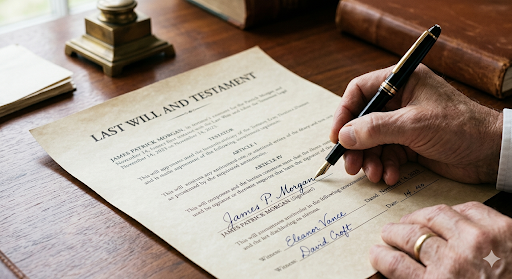
- You must be 18 or over
- You must be of sound mind — aware of what a will is, what you own, and who your beneficiaries are
- The will must be in writing — typed or handwritten (not video or audio)
- You must sign the will in the presence of two witnesses, all three present at the same time
- Both witnesses must sign in your presence immediately after you
- Witnesses must be over 18, of sound mind, and must not be beneficiaries or the spouse of a beneficiary
Scotland operates under different rules — one independent witness is required, and the will must be signed at the bottom of each page. If you live in Scotland, always take advice from a Scottish solicitor.
Making a Will in Retirement: How to Get Professional Help for Free
If the cost of a solicitor or will writer has put you off, there is good news specifically for people aged 55 and over. The cost of making a will in retirement is far lower than most people expect — and for the over-55s, there is even a free option.
| ✅ Free Wills Month — October 2026 Free Wills Month runs every March and October. Participating solicitors write simple wills at no cost for people aged 55 and over — the solicitor is paid by the charity partnership, not by you. For couples making mirror wills, only one partner needs to be 55. The next campaign begins in October 2026. Visit freewillsmonth.org.uk to find a participating solicitor near you. Note: the service covers simple wills only — if your estate is complex, the solicitor may charge additional fees. Whatever you do don’t put off making a will in retirement because your going to wait for ‘Free Will Month’ |
Will Aid also runs every November — participating solicitors write basic wills in exchange for a voluntary charitable donation, typically £120 for a single will. For more complex estates, solicitors typically charge £150 to £400 for a straightforward will, rising to £500 or more where trusts or tax planning are involved.
Don’t Stop at a Will — Power of Attorney Matters Just as Much
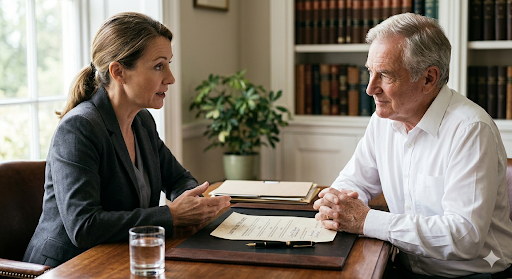
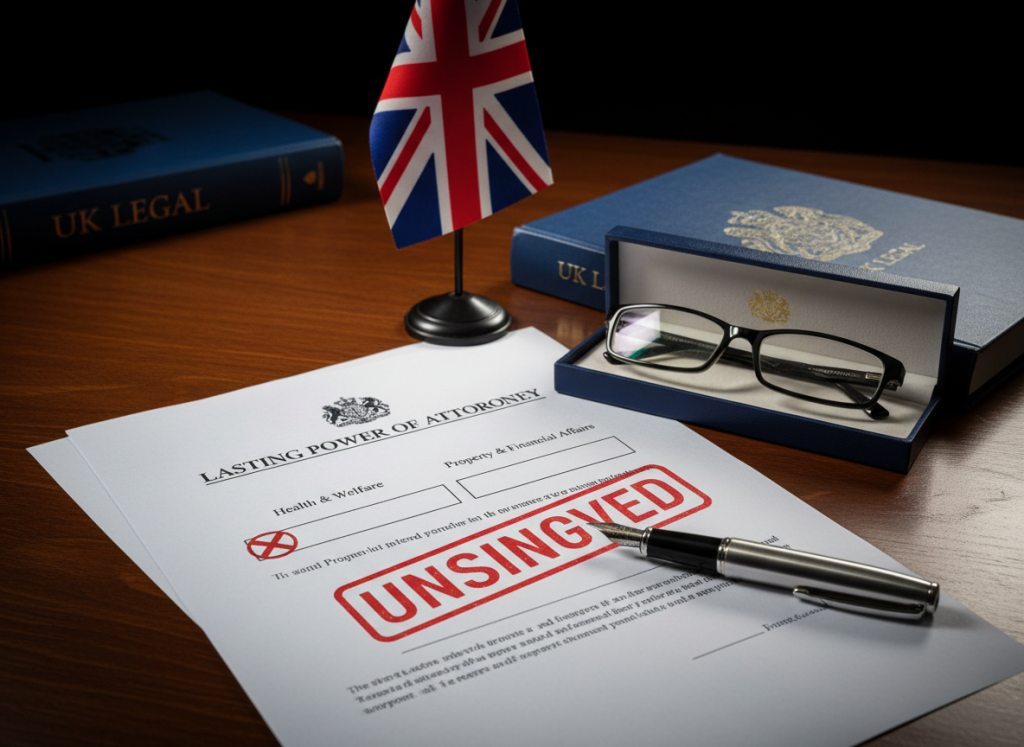
Making a will in retirement deals with what happens after you die. But what about if you lose the capacity to make decisions while you are still alive? A Lasting Power of Attorney (LPA) gives someone you trust the legal authority to manage your finances, property, and health decisions if you are unable to do so. The two documents work hand in hand — and a qualified will writer can help you put both in place.
A will without an LPA in place leaves a significant gap. Read our full guide: Power of Attorney UK: Everything You Need to Know.
Your Questions Answered
Do I need a solicitor to write a will in retirement?
There is no legal requirement to use a solicitor. However, Honest Pensioner strongly recommends using either a qualified will writer or a solicitor for anyone in retirement. Making a will in retirement involves estates that are typically more complex than people realise — property, pensions, second marriages, blended families — and a professional will identify issues a template never will.
Who can witness a will in the UK?
Any two adults over 18 who are not beneficiaries of the will and are not married to a beneficiary. They do not need to read the will — they simply need to watch you sign it and sign it themselves, all three of you present in the same room at the same time. A solicitor, doctor, neighbour, or colleague are all suitable choices. A blind person cannot act as a witness.
Does getting married cancel my existing will?
Yes. In England and Wales, marriage automatically revokes a will. If you remarry in retirement and do not write a new will, your previous will is void and your estate will be distributed under intestacy rules. This is one of the most common and most avoidable estate planning mistakes made in later life.
How much does it cost to have a will written professionally?
For people aged 55 and over, Free Wills Month (March and October) offers free simple wills through participating solicitors. Will Aid in November offers wills in exchange for a voluntary donation of around £120. Outside these schemes, qualified will writers typically charge £100 to £250 for a single will, and solicitors charge £150 to £400. Complex wills involving trusts cost more — but the cost of getting it wrong is almost always far higher.
Your Making a Will in Retirement Action Checklist
☑ What to Do Now
- Make a list of all your assets — property, savings, investments, pensions, life insurance, and valuable possessions
- Decide who you want to benefit and in what proportions
- Choose your executor(s) — ideally two — and ask them first before naming them
- If you are 55 or over, check whether Free Wills Month is open at freewillsmonth.org.uk
- Contact a qualified will writer — find a member at Society of Will Writers or Institute of Professional Willwriters
- If you own property jointly, check whether you hold it as joint tenants or tenants in common — this affects what can and cannot be left in your will
- Review your pension nomination forms — from April 2027, unused pensions will be subject to inheritance tax
- Consider a Lasting Power of Attorney at the same time — it is equally important
- Store your completed will safely — not in a bank safety deposit box — and tell your executors where to find it
- Review your will every five years and after every major life event
The Bottom Line on Making a Will in Retirement
If there is one thing this guide should leave you with, it is this: making a will in retirement is urgent, personal, and too important to leave to a generic template. Making a will in retirement is not a box-ticking exercise. It is an act of care for the people you love — and it deserves the same attention you would give to any important financial decision.
The 7 dangerous consequences outlined in this guide are not rare exceptions. They are the everyday reality of wills that were written without proper advice, or not updated as life changed. The couple in our care home fees guide had a plan that seemed perfectly reasonable. A £1 million estate. Almost nothing left. The right will, properly structured by a qualified professional, would have changed everything.
Your circumstances are different from your neighbour’s, your sibling’s, and the person who wrote that free online template. Please get proper advice. It costs far less than getting it wrong.