
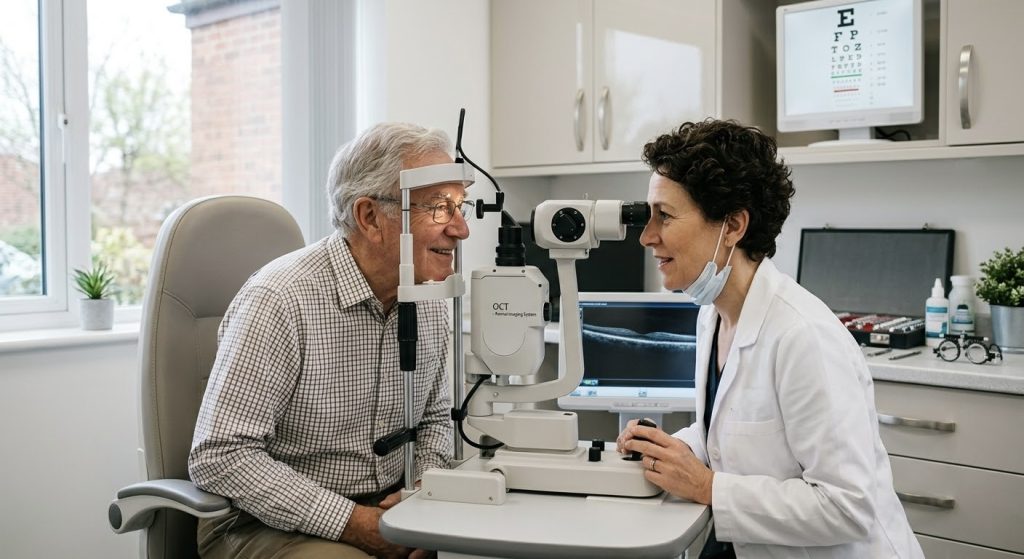
If you’re over 55 and finding you rely more and more on reading glasses — or you’re exploring options beyond cataract surgery — you may have come across lens replacement surgery abroad as a way to access treatment faster and more affordably than in the UK. It’s a growing choice for British and Irish patients, but like any medical decision made outside the NHS, it’s one worth researching carefully before you book. Here’s what lens replacement surgery abroad actually involves, and the questions to ask before choosing a clinic.
What Is Lens Replacement Surgery?
Lens replacement surgery — also known as refractive lens exchange (RLE) — involves removing the eye’s natural lens and replacing it with an artificial intraocular lens (IOL). The technique is closely related to modern cataract surgery, though RLE is typically carried out before a cataract has significantly affected vision. The procedure itself usually takes 10–20 minutes per eye under local anaesthetic, with most patients resuming normal activities within a day or two.
Who Might Consider It?
RLE is most commonly considered by people over 45 who are increasingly dependent on reading glasses, or who have long-sightedness (hyperopia), short-sightedness (myopia), or presbyopia and want to reduce their reliance on glasses or contact lenses long-term. Unlike laser eye surgery, RLE can be a suitable option for people who aren’t good candidates for corneal-based procedures. Regular checks matter here too — it’s worth staying on top of your free NHS health checks more generally as part of monitoring your eye and overall health as you get older.
Types of Intraocular Lenses (IOLs)
- Monofocal lenses — correct vision at one distance, usually paired with reading glasses for close work
- Multifocal lenses — allow focus at two distances (near and far)
- Trifocal lenses — add a third, intermediate focal point for the fullest range of vision without glasses
- Toric lenses — correct astigmatism, and can be combined with multifocal or trifocal designs
Your suitability for each lens type depends on your eye health, lifestyle and vision goals, which is why a proper preoperative assessment matters more than the lens choice itself.
Why Some UK Patients Choose Prague for Lens Replacement Surgery Abroad
Cost is the biggest driver. Private lens replacement surgery in the UK typically costs £4,000–£6,500 per eye at leading clinics, meaning both eyes can easily reach £12,000–£14,000 with premium lenses. In Prague, the same procedure — performed by EU-certified surgeons using comparable equipment and lens technology — is often available at a significant fraction of that cost, with many clinics offering all-inclusive packages covering consultation, surgery and follow-up care.
One example is Sandonia, a Prague-based specialist eye clinic offering lens replacement surgery in Prague to international patients from the UK, Ireland and the US, offering English-language support throughout the process, from initial consultation to post-operative check-ups.
Shorter waiting times are another factor — many UK patients face lengthy private waiting lists, while clinics abroad can often schedule surgery within one to two weeks. Combined with Prague’s appeal as a short city break destination, it’s easy to see why the city has become a popular hub for this kind of medical tourism.

9 Things to Check Before Booking Treatment Abroad
1. Surgeon Qualifications and Clinic Accreditation
Check the surgeon’s registration, training and specialist qualifications (in the Czech Republic, look for FEBO — the European Board of Ophthalmology standard). Reputable clinics will publish this information clearly rather than making you ask.
2. What’s Actually Included in the Price
Headline prices can be misleading. Confirm whether the quote covers the preoperative examination, both eyes, your chosen lens type, the booking fee, and post-operative check-ups — or whether these are added separately.
3. Aftercare Once You’re Home
Ask exactly how follow-up care works after you’ve returned to the UK. Will the clinic coordinate with a local optometrist? Is there a helpline for concerns in the weeks after surgery?
4. Language Support Throughout
Miscommunication about your vision goals or medical history is a real and preventable risk. Make sure English-language support is available at every stage — consultation, consent forms, surgery day and aftercare — not just in the initial sales conversation.
5. Follow-Up for YAG Laser Capsulotomy
A proportion of RLE patients need a YAG laser capsulotomy — a quick, painless outpatient procedure — one to five years after surgery. Ask how this is handled if it’s needed after you’ve returned home.
6. Travel and Recovery Logistics
Most patients stay four to six days abroad to allow for consultation, surgery on both eyes and initial recovery checks. Factor in accommodation, travel insurance that covers your procedure, and having someone with you if needed.
7. Independent Reviews, Not Just Testimonials
Look beyond the reviews published on a clinic’s own website. Check independent platforms and, where possible, speak to former patients directly about their experience.
8. What Protection You Have If Something Goes Wrong
Treatment abroad doesn’t come with NHS-style recourse if complications arise. Understand what guarantees, insurance or complaints procedures the clinic offers, and check whether your travel insurance covers medical complications from planned treatment.
It’s also worth reviewing whether your own private health insurance would cover any complications arising from planned treatment abroad, since most standard travel insurance policies won’t.
9. Is lens replacement surgery abroad safe?
Lens replacement surgery abroad can be just as safe as treatment in the UK, provided you choose a properly accredited clinic with EU-certified surgeons and clear aftercare arrangements. Clinics like Sandonia in Prague follow the same clinical standards as leading UK private providers, using comparable equipment and lens technology. As with any medical procedure, safety ultimately comes down to the individual clinic and surgeon rather than the country itself — which is exactly why the checks outlined above matter so much before you book

Questions to Ask Before Choosing a Clinic Abroad
- What are your surgeon’s qualifications and how many procedures have they performed?
- What exactly is included in the quoted price?
- How is aftercare managed once I’m back in the UK?
- What happens if I need a follow-up procedure like YAG capsulotomy?
- Can I speak to previous patients or see independent reviews?
- What is your policy if complications occur?
Frequently Asked Questions
Is lens replacement surgery abroad safe? Clinics accredited to EU standards and staffed by qualified ophthalmic surgeons can offer care comparable to UK private clinics. As with any medical procedure, safety depends on the individual clinic and surgeon, so due diligence matters.
How much can I save by having lens replacement surgery abroad? Savings vary, but UK patients can often save a substantial amount compared with £4,000–£6,500 per eye at leading UK private clinics, even after factoring in travel and accommodation.
How long do I need to stay abroad? Most clinics recommend four to six days to allow for consultation, surgery on both eyes and initial recovery checks.
Will I need glasses again after lens replacement surgery? This depends on the lens type chosen. Multifocal and trifocal lenses aim to reduce dependence on glasses at multiple distances, while monofocal lenses typically still require reading glasses for close work.