
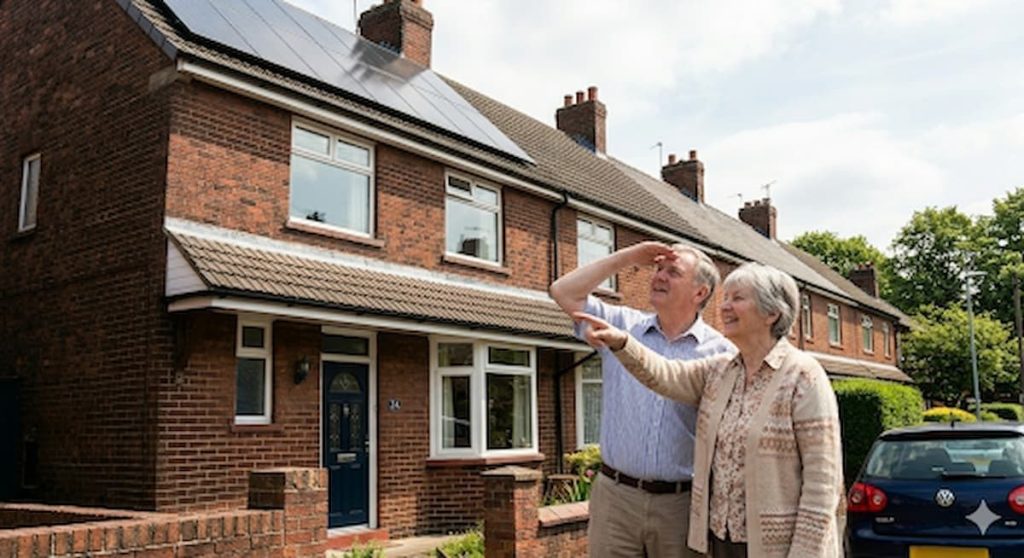
Pensioner solar grants exist that could save you thousands of pounds — but most people have no idea they are available.
I was chatting with a friend recently when he said something that stopped me in my tracks. He lives on a council estate, so I naturally assumed what most people would — that any free solar panels and battery he’d had installed must have come through his landlord or the council as part of some social housing scheme. He put me right immediately. He owns his home, he’s still working, and he’d qualified for the grant entirely in his own right.
That conversation sent me straight to my laptop. What I found surprised me — and I think it will surprise you too. There are several routes through which pensioners and over-55s can access free or heavily subsidised solar panels and battery storage, and most people have no idea they exist.
Here’s everything you need to know.
Can Pensioners Really Get Free Solar Panels?
The short answer is yes — but it depends on your household income, the benefits you receive, and how energy-efficient your home currently is.
There is no single pensioner solar grant that hands out free panels to every homeowner. What does exist is a patchwork of government grants and council-backed routes that, if you qualify, can cover the entire cost of installation — panels, battery, and all.
A typical solar panel and battery system costs between £6,000 and £10,000 installed. For those who qualify for pensioner solar grants, that bill is reduced to zero.
The Main Pensioner Solar Grants Available in 2026
1. Warm Homes: Local Grant
This is currently the most generous pensioner solar grant available in England. The Warm Homes: Local Grant is part of the government’s wider Warm Homes Plan. It offers grants of up to £15,000 for energy efficiency upgrades — including solar panels and battery storage — to eligible households.
Who qualifies:
- Households with an income under £36,000 a year
- Those receiving certain qualifying benefits (including Pension Credit)
- Homes with an Energy Performance Certificate (EPC) rating of D, E, F, or G
The grant is administered by local councils, which means eligibility can vary slightly depending on where you live. This is also why my friend — working, homeowning — qualified. He wasn’t on benefits, but his household income and his home’s EPC rating put him firmly within the criteria.
How to apply: Contact your local council directly, or use an MCS-certified installer who can check and apply on your behalf.
2. ECO4 (Energy Company Obligation)
ECO4 is one of the most widely used pensioner solar grants — a government scheme that requires the UK’s major energy suppliers to fund free energy efficiency improvements for low-income and vulnerable households. It runs until 31 December 2026 — so if you think you might qualify, now is the time to act.
Who qualifies:
- Households receiving means-tested benefits such as Pension Credit, Universal Credit, Housing Benefit, or Income Support
- Homes with an EPC rating of D or below
- Homes with electric heating (solar panels under ECO4 are only available where electric heating is already in place — not gas boilers)
Important: Funding under ECO4 is first-come, first-served. The scheme closes at the end of 2026 and will not be directly replaced in its current form.
3. LA Flex (Local Authority Flex)
This is the lesser-known pensioner solar grant route — and the one most likely to explain my friend’s situation.
LA Flex is an extension of the ECO scheme that gives local councils the power to set their own eligibility criteria. This means your council can refer households who don’t quite meet the standard ECO4 benefit requirements but are still considered low-income or at risk of fuel poverty.
In plain English: even if you don’t receive qualifying benefits, your council may still be able to put you forward for pensioner solar grants through this route. It’s worth a direct call to your local authority to ask.
4. The Warm Homes Plan (Coming 2027)
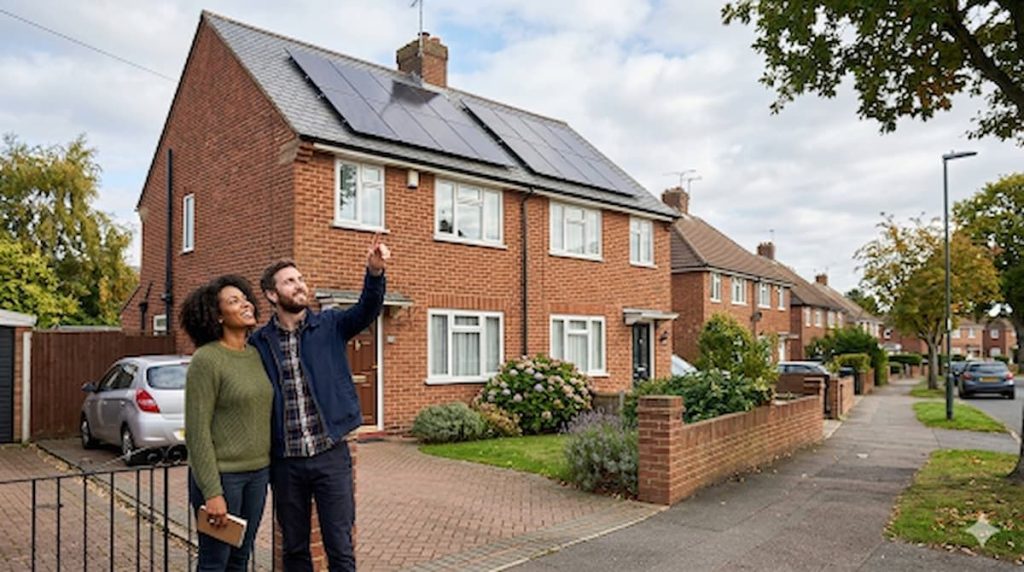
For those who don’t qualify for a full grant today, there is better news on the horizon.
The government’s £15 billion Warm Homes Plan will provide 0% interest loans for solar panels and batteries to all UK homeowners — regardless of income. It launched in January 2026 but is not expected to be fully operational until 2027.
This is significant because it will open up solar to a far wider group of people, not just those on lower incomes. Watch this space.
What About Scotland, Wales, and Northern Ireland?
If you don’t live in England, equivalent pensioner solar grants exist in the devolved nations:
- Scotland: Warmer Homes Scotland and the Home Energy Scotland Grant and Loan — available to households in or at risk of fuel poverty, with grants up to £7,500 and additional interest-free loan options.
- Wales: The NEST Warm Homes Wales scheme can fund 100% of installation costs for eligible households.
- Northern Ireland: The Affordable Warmth Scheme provides similar support for low-income households.
Zero VAT — The Saving Everyone Gets
Even if you don’t qualify for pensioner solar grants, there is one benefit that applies to every homeowner in the UK.
Since April 2022, solar panels, battery storage, and heat pumps are all zero-rated for VAT on residential installations. Previously the rate was 5% — and before that, 20%. On a typical system costing £6,500, that VAT saving alone amounts to over £1,000.
This saving is automatic — any MCS-certified installer will apply it without you needing to do anything.
Getting Paid for the Electricity You Generate
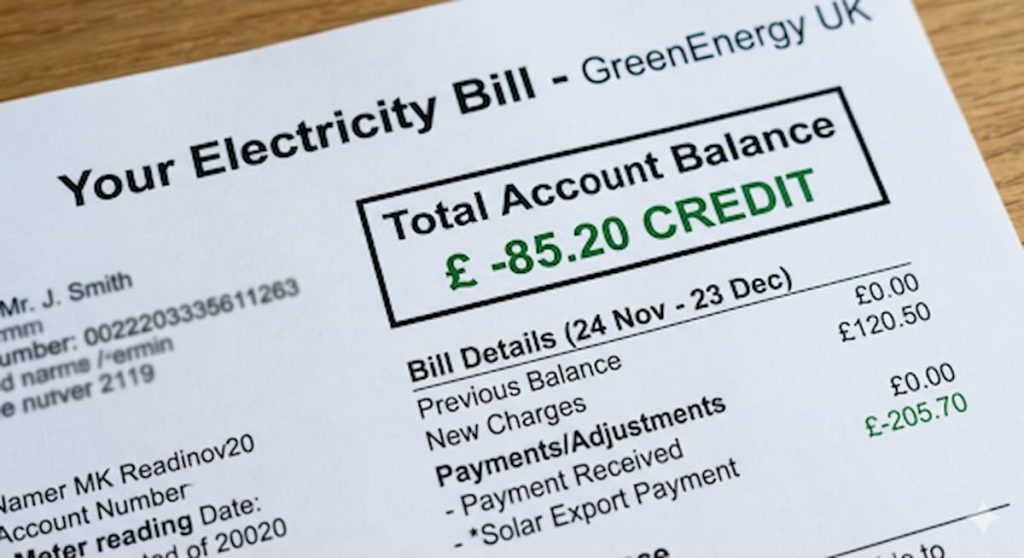
This was the part of my friend’s story that really caught my attention. Not only did he get his system for free — he’s now earning money from it every month.
This is done through the Smart Export Guarantee (SEG), a government-backed scheme that requires energy suppliers to pay you for the surplus electricity your solar panels export to the grid.
When your panels generate more electricity than your home is using — during sunny afternoons, for example — the excess flows back into the national grid and your supplier pays you for every unit.
What can you expect to earn?
Rates vary significantly between suppliers — currently ranging from around 3p to over 15p per kilowatt hour (kWh). The best fixed rate available as of May 2026 is British Gas at 15.1p per kWh (existing customers only). Octopus and OVO both offer 12p per kWh. A typical 4kW system earns between £120 and £240 per year.
Key things to know about the SEG:
- You must have an MCS-certified installation and a smart meter to qualify
- You don’t have to buy your electricity from the same supplier you sell to
- Rates change — it’s worth reviewing annually
- Having a battery reduces your exports but increases your overall savings, since you import less from the grid
What Happened to the Old Feed-in Tariff?
Older readers may remember the Feed-in Tariff (FiT), which was considerably more generous — it paid you for every unit your panels produced, whether you used it or not. The FiT closed to new applicants in March 2019. If you signed up before then, you’re still receiving those payments.
The Smart Export Guarantee replaced it in January 2020. It’s less generous, but combined with pensioner solar grants covering installation costs and today’s high electricity prices, the overall return is still very worthwhile.
A Quick Summary: Which Route Is Right for You?
| Your Situation | Best Option to Explore |
| Income under £36,000, EPC rating D–G | Warm Homes: Local Grant |
| Receiving Pension Credit or other benefits | ECO4 (before December 2026) |
| Don’t receive benefits but low income | Ask your council about LA Flex |
| Homeowner who doesn’t qualify for grants | 0% VAT + consider 2027 Warm Homes loans |
| Already have solar panels | Register for the Smart Export Guarantee |
| Based in Scotland | Warmer Homes Scotland / Home Energy Scotland |
| Based in Wales | NEST Warm Homes Wales |
What to Do Next
- Check your EPC rating — find it free at the GOV.UK EPC Register. A rating of D or below opens up the most grant options.
- Contact your local council — ask specifically about the Warm Homes Local Grant and LA Flex eligibility in your area.
- Use an MCS-certified installer — find one via the MCS Certified directory. They can check and apply for grants on your behalf, often at no cost to you.
- Register for the SEG — once panels are installed, compare export tariffs and register with the best rate. Don’t leave money on the table.
- Act before December 2026 — ECO4 closes at the end of the year and its successor scheme is not yet confirmed.
The Bottom Line

The conversation with my friend made me realise how many people are simply unaware these schemes exist. The assumption — and I made it myself — is that free solar panels are only for people on benefits in rented social housing. That’s not the case.
If your household income is modest, your home’s energy rating is below a C, or you receive Pension Credit or certain other benefits, you could be sitting on pensioner solar grants worth thousands of pounds that you’ve never claimed.
It’s also worth checking whether you’re receiving all the benefits you’re entitled to. Our guide to unclaimed benefits for pensioners covers the most overlooked entitlements — many of which could also open the door to qualifying for a solar grant.
At the very least, it costs nothing to check. A quick call to your council or a free survey from a certified installer will tell you exactly where you stand.
Always use an MCS-certified installer for solar panel work. Eligibility criteria for government schemes can change — check GOV.UK or your local council for the most up-to-date information before applying.