Identity fraud is the most common crime in the UK you may not even know has happened to you — until the chaos arrives at your door. Someone, somewhere, is using your name, address, date of birth, or National Insurance number to borrow money, open credit cards, and drain accounts. And according to the latest figures from Cifas, the UK’s fraud prevention service, people over 61 are now the most targeted age group of all.
In 2025, more than 242,000 cases of identity fraud were filed to the National Fraud Database — and filings involving victims aged over 61 rose by 13%, representing 29% of all cases. If you are a pensioner, this crime is not a distant threat. It is a present and growing danger.
This guide covers the three things that matter most: the serious damage identity fraud causes, how to stop it happening in the first place, and — if the worst happens — how to begin unravelling the chaos it leaves behind.
Table of Contents
What Is Identity Fraud and Why Are Pensioners Targeted?
Identity fraud happens when a criminal uses your personal details — name, date of birth, address, National Insurance number, or bank details — to impersonate you for financial gain. They may open loans in your name, apply for credit cards, redirect your post, or take over your existing bank accounts.
Pensioners are disproportionately targeted for several reasons. Retirement brings paperwork: pension letters, council tax bills, NHS correspondence. That paperwork contains valuable personal data. Older adults are also more likely to have a good credit history, own property, and hold savings — making them a more attractive target for fraudsters seeking to borrow money.
AI-powered impersonation is making the problem worse. The latest Cifas Fraudscape 2026 report warns that synthetic identities are being “industrialised” by criminal networks — with criminals building convincing long-term profiles that blend real and fabricated information to bypass checks at banks and lenders.
| ⚠️ Key Statistic Fraud now makes up 45% of all crime in England and Wales, according to the National Crime Agency. The ONS recorded around 4.2 million fraud incidents in the year to March 2025 — a 31% increase on the previous year. |
The Damage Identity Fraud Can Cause
The consequences of identity fraud reach far beyond a stolen sum of money. Victims describe months, sometimes years, of trying to put right what a criminal did in hours. Here is a clear picture of the harm involved.
1. Financial Loss
Fraudsters can take out loans, credit cards, and buy-now-pay-later agreements in your name. You may receive demands for debts you never incurred. In serious cases, mortgages have been taken out against people’s properties without their knowledge.
2. Wrecked Credit History
Every fraudulent application leaves a mark on your credit file. Missed payments on accounts you did not open can destroy a previously excellent credit score, making it harder to remortgage, take out insurance, or even open a new bank account.
3. Post Theft and Account Takeover
Fraudsters often redirect your mail to a different address before striking. You may not realise anything is wrong until a bank statement or official letter simply stops arriving. Account takeover — where a criminal gains access to your existing bank or online accounts — can empty savings very quickly.
4. Emotional and Psychological Toll
Victims consistently describe the experience as violating, exhausting, and distressing. The feeling that someone has been ‘living as you’ financially causes real anxiety. The time spent making calls, writing letters, and repeating your story to different organisations takes its toll.
5. Time and Bureaucracy
Resolving identity fraud is rarely quick. On average, it takes UK victims seven months to discover they have been targeted and a further three months to resolve it. In complex cases, it can take several years. Multiple organisations — banks, credit reference agencies, lenders, and the police — all need to be contacted separately.

9 Ways to Protect Yourself From Identity Fraud
Prevention is far easier than recovery. These nine steps will significantly reduce your risk.
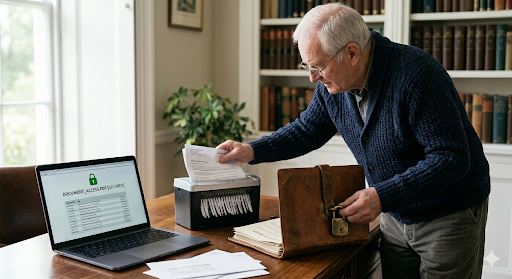
- Shred every document containing your name, address, account numbers, or date of birth before putting it in the bin. A cross-cut shredder is worth the investment.
- Set up a mail redirection review with Royal Mail if you have recently moved, and notify all organisations of your new address promptly. Uncollected mail is a common entry point for fraudsters.
- Check your credit report regularly using a free service such as Experian, Equifax, or TransUnion. Look for any applications or accounts you do not recognise.
- Use strong, unique passwords for every online account. A password manager makes this practical even if you are not confident with technology.
- Never use public Wi-Fi for banking or anything involving personal data. Your home broadband connection should be password protected.
- Review your social media privacy settings. Fraudsters gather personal data — date of birth, town, former employer — from public social media profiles to build a picture of you.
- Register with the Mailing Preference Service to reduce the volume of unsolicited post, which can contain personal details that go astray.
- Be suspicious of anyone contacting you out of the blue — by phone, post, or email — asking you to confirm personal details. Legitimate organisations rarely do this.
- Consider signing up to Cifas Protective Registration (see below) as a proactive safeguard, not just a response after the fact.
Warning Signs That Identity Fraud May Have Already Occurred
Identity fraud can go undetected for months. Watch for these red flags.
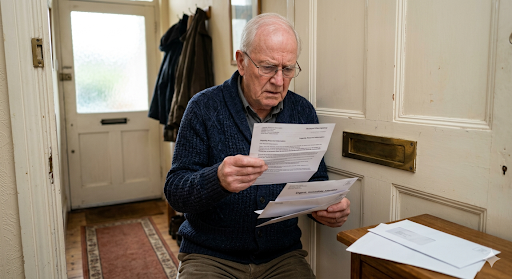
- Letters arrive addressed to someone you do not know at your address
- Expected post — bank statements, bills, pension letters — suddenly stops arriving
- You receive credit card statements, loan demands, or debt collection letters for accounts you did not open
- Your credit application is declined despite having a good credit history
- Unfamiliar transactions appear on your bank or credit card statements
- You receive a call from your bank about activity you do not recognise
- Your credit report shows addresses you have not lived at, or searches you did not initiate
How to Unravel the Chaos: A Step-by-Step Recovery Guide
Discovering you are a victim of identity fraud is alarming. The key is to act quickly and systematically. Here is the order of priority.
Step 1: Contact Your Bank Immediately
Call your bank’s fraud line as soon as you suspect anything. Ask them to place a hold on pending transactions and begin their claims process. Most major UK banks are signed up to the Contingent Reimbursement Model, which gives you stronger rights to reimbursement if fraud has occurred.
Step 2: Report to Action Fraud
Report the fraud to Action Fraud on 0300 123 2040 or via their website. You will receive a crime reference number, which is essential for dealing with banks, lenders, and credit reference agencies.
Step 3: Apply for a Cifas Victim of Impersonation Marker
Contact Cifas to have a ‘Victim of Impersonation’ warning placed on your file. This tells all Cifas member organisations — which includes virtually every major bank and lender in the UK — to carry out extra verification when your details are used. The marker lasts 13 months.
Step 4: Contact the Three Credit Reference Agencies
You need to contact Experian, Equifax, and TransUnion separately. Ask each to add a Notice of Correction to your file explaining that you have been a victim of identity fraud. This does not remove fraudulent entries immediately but flags your account to any lender reading your file.
Step 5: Write to Each Fraudulent Lender
For every account or loan opened in your name that you did not authorise, write to the lender formally disputing the debt. Include your crime reference number from Action Fraud. Lenders are legally required to investigate and, if the fraud is confirmed, to remove the entry from your credit file.
Step 6: Report Any Mail Redirection
If you believe your post has been redirected, contact Royal Mail’s Redirection Enquiries team on 03457 777 888. They can check whether a redirection is active on your address and cancel it.
Step 7: Consider Cifas Protective Registration
Once the immediate crisis is resolved, consider taking out Cifas Protective Registration for £30 for two years. This places a warning flag against your name in the National Fraud Database, prompting extra checks whenever anyone — including a fraudster — tries to use your details to apply for credit.
Why Identity Fraud Is Getting Harder to Spot
The days of obvious scam emails full of spelling mistakes are largely gone. Fraudsters now use AI to generate highly convincing letters, emails, and even phone calls. Deepfake voice technology can replicate the voice of your bank’s real customer service team.
Cifas’s 2026 report specifically warns of “fraud-as-a-service” — criminal networks that sell ready-made fraud toolkits to low-skill offenders, dramatically lowering the bar for carrying out sophisticated identity crimes. Synthetic identities — partly real, partly invented — are being built over months or years before being used, making them extremely difficult to detect.
The message for pensioners is not to be paralysed by fear, but to be methodically vigilant. The protections outlined in this article, taken together, create a strong defence.
Related Guides on Honest Pensioner
If this article has been useful, you may also want to read our guides on Facebook video scams targeting pensioners, phone scams and how to spot them, and our full overview of scams targeting pensioners in the UK.
| 💡 Quick Reference: Who to Contact Action Fraud: 0300 123 2040 | actionfraud.police.uk Cifas Victim of Impersonation: cifas.org.uk Cifas Protective Registration: cifas.org.uk/pr (£30 for 2 years) Experian: 0344 481 0800 Equifax: 0333 321 4043 TransUnion: 0330 024 7574 Royal Mail Redirection: 03457 777 888 |
The Bottom Line
Identity fraud is not a victimless, abstract crime. It is a targeted, calculated attack that can take months to discover and years to fully resolve. Pensioners in the UK are in the crosshairs more than any other age group right now.
The good news is that the steps to protect yourself are practical and achievable. Shred your documents. Monitor your credit file. Be suspicious of unsolicited contact. And if the worst happens, act fast, use the contacts in this guide, and know that there are routes to resolution.
Have you or someone you know been affected by identity fraud? We’d like to hear your experience — leave a comment below or visit our Scams & Fraud hub for more guides.