Disabled facilities grant funding is one of the most valuable and most overlooked benefits available to pensioners in the UK. Up to £30,000 is available to help adapt your home — and yet thousands of people who are fully entitled to it never apply, simply because they do not know it exists.
If you or someone you live with has a disability, a long-term health condition or simply finds it increasingly difficult to manage at home safely, this grant could pay for everything from a stairlift to a walk-in shower to a fully adapted bathroom. The work is arranged through your local council and, if your income and savings are below a certain level, you may pay nothing at all.
This guide explains everything you need to know about the disabled facilities grant — what it covers, who qualifies, how the means test works, how to apply and what to do if the grant is not enough to cover the full cost of the work you need.
Table of Contents
What Is the Disabled Facilities Grant?
The disabled facilities grant (DFG) is a statutory funding scheme administered by local councils across the UK. It is a mandatory grant — meaning that if you meet the eligibility criteria, your council is legally required to consider your application. They cannot simply refuse to accept it.
The grant was designed to help people with disabilities or long-term health conditions make essential adaptations to their homes so they can continue living there safely and independently. It covers both owner-occupiers and tenants — including private renters, housing association tenants and council tenants.
The scheme has been running for decades but remains significantly underused. Many pensioners assume adaptations have to be paid for privately, or that they would not qualify. In many cases, neither assumption is correct.
Who Is Eligible for the Grant?
To qualify for the grant, you must meet two conditions. First, you must have a disability or long-term health condition that makes it difficult to access or use your home safely. Second, you must intend to continue living in the property for at least five years from the date the work is completed.
Eligible applicants include:
- Owner-occupiers
- Private tenants — though you will usually need your landlord’s permission for structural works
- Housing association tenants
- Council tenants — though social landlords sometimes fund adaptations themselves
- Some occupiers of caravans and houseboats
You do not need to be receiving any particular benefit to apply, though being in receipt of certain benefits — such as PIP, Attendance Allowance or Universal Credit — can strengthen your application and may mean you qualify for the full grant amount without a financial contribution.
Importantly, you can apply for the scheme even if your council has decided you do not have eligible care needs under a separate care assessment. The two processes are independent of each other.
What Can a Grant Pay For?
This is where the grant becomes genuinely transformative for many pensioners. The range of adaptations it can fund is much broader than most people realise.
Commonly funded adaptations include:
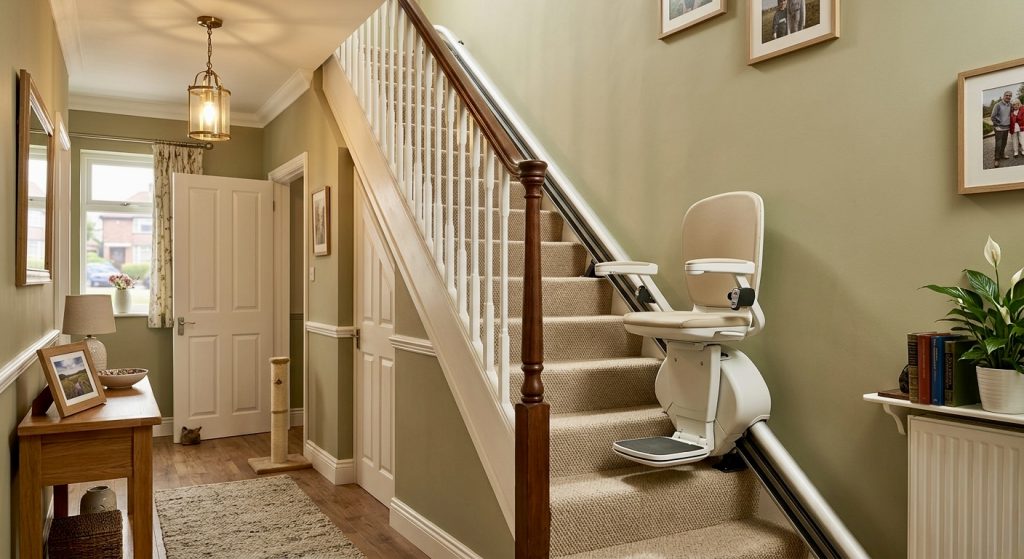
- Stairlifts and through-floor lifts — see our stairlift buying guide for what to look for before you buy
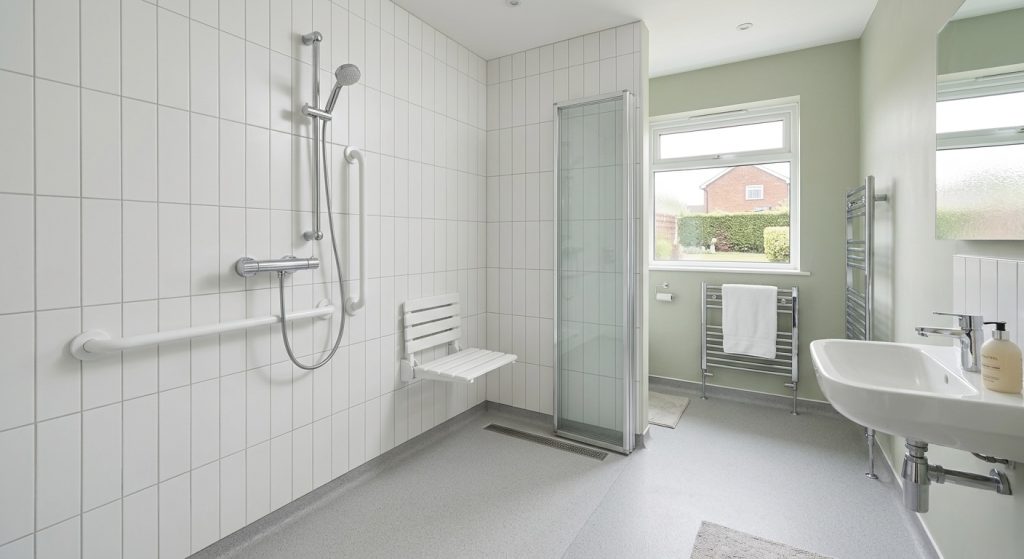
- Level access showers and wet rooms
- Grab rails, handrails and support bars
- Ramps and widened doorways for wheelchair access
- Adapted kitchen facilities — lowered worktops, accessible storage
- Heating system improvements where the disability makes temperature control essential
- Lighting adaptations for visual impairments
- Specialist door entry systems and security adaptations
- Extensions or room conversions where no ground floor facilities exist
The work must be assessed and approved by an occupational therapist (OT) before it can proceed. The OT will visit your home, assess your needs and recommend what adaptations are necessary. The council will only fund work the OT has identified as needed — you cannot simply draw up your own list of improvements and submit them for funding.
[
How Much Can You Get From a Disabled Facilities Grant?
The maximum disabled facilities grant amount varies depending on where in the UK you live:
| Country | Maximum Grant |
| England | £30,000 |
| Wales | £36,000 |
| Scotland | £25,000 (via Housing Adaptations Grant) |
| Northern Ireland | £30,000 |
These are maximum figures. The actual amount you receive depends on the outcome of a means test — a financial assessment of your income and savings. However, if you are in receipt of certain means-tested benefits, you may qualify for the full amount with no personal contribution required.
The Means Test Explained
The grant is means-tested, which puts many people off applying. But the means test is more generous than most people expect, and in many cases pensioners qualify for the full grant amount.
Key points about the means test:
- The first £6,000 of your savings are completely ignored
- Your partner’s income and savings are included in the assessment even if they are not the applicant
- If you receive PIP, Attendance Allowance, Universal Credit or certain other means-tested benefits, you may qualify for 100% of the grant with no contribution
- If your assessed contribution is less than the cost of the work, the grant covers the remainder up to the maximum
- Some councils operate discretionary top-up funds for cases where the standard grant is not sufficient
The financial picture around care and housing adaptations is complex. Our guide to care home costs UK 2026 explains how local authorities assess finances more broadly, which is useful context if you are also thinking about longer-term care planning.
How to Apply for a Disabled Facilities Grant — Step by Step
Applying for a grant takes time and patience, but the process is straightforward if you know what to expect. Here is how it works:
Step 1 — Contact your local council Ask for the housing adaptations team or home improvement agency. Tell them you want to apply for a disabled facilities grant. They cannot refuse to give you an application form.
Step 2 — Occupational therapist assessment An OT will visit your home and assess what adaptations are necessary. This assessment drives the entire application — the council will only fund what the OT recommends.
Step 3 — Initial Test of Resources (ITOR) A preliminary financial check to give you an early indication of how much you might be expected to contribute. No documents required at this stage.
Step 4 — Final Test of Resources (FTOR) The formal financial assessment. You will need to provide evidence of income, savings and assets for yourself and your partner.
Step 5 — Grant approval Once approved, you have 12 months to complete the work. Do not start any work before formal approval — you could lose the grant entirely.
Step 6 — Work completed and inspected The council inspects the finished work before releasing payment to the contractor.
The official application guidance is available at gov.uk/disabled-facilities-grants. The Foundations ‘Adapt My Home’ tool at foundations.org.uk allows you to do a quick eligibility self-assessment before you begin.

How Long Does a Take?
This is one of the most common frustrations with the scheme. Waiting times vary enormously between councils — some process applications within a few months, others can take a year or more from initial enquiry to work completion.
The law requires councils to make a decision on a formal application within six months. However, that clock only starts when the formal application is submitted — the OT assessment and financial checks happen before that stage, and these can add significant time.
If your situation is urgent — for example, you have recently left hospital and need adaptations to return home safely — tell the council this at the outset. Many councils have a fast-track route for urgent cases.
What If the Grant Is Not Enough?
If the cost of the work you need exceeds the grant maximum, you have several options:
- Ask your council about discretionary top-up funding — many councils have additional budgets for cases where the standard grant falls short
- Speak to a Home Improvement Agency (HIA) — these are local organisations that help older and disabled people access funding and organise adaptations work. Find your local HIA at foundations.org.uk
- Check whether any of the work qualifies for separate funding — for example, some heating improvements may be fundable through the Warm Homes scheme
- Consider whether a smaller scope of works would meet your most essential needs within the grant limit. Our guide to sheltered housing vs care home costs may help you think through longer-term options if adaptations alone are not sufficient
The Repayment Condition — What to Watch Out For
One aspect of the scheme that catches many people out is the repayment condition. If you sell or transfer your property within 10 years of the work being completed, your council may ask you to repay between £5,000 and £10,000 of the grant.
This does not apply to everyone — individual councils set their own policies on repayment — but it is worth asking about before you apply, particularly if you think you might move home within the next decade.
If you are worried about how housing assets interact with care costs more broadly, our guide to how to protect your home from care home fees covers the key risks and how to plan ahead.
FAQs
What can a disabled facilities grant pay for?
Disabled facilities grant funding covers a wide range of essential home adaptations including stairlifts, level access showers, ramps, widened doorways, grab rails, adapted kitchens and specialist door entry systems. The exact work funded depends on what an occupational therapist assesses you as needing.
How do I apply for a disabled facilities grant?
Contact your local council’s housing team and ask for a disabled facilities grant application. They must give you one. An occupational therapist will then assess your home before the formal application and financial assessment take place.
What grants can I get if I am on PIP?
If you receive Personal Independence Payment (PIP), you are likely to qualify for a disabled facilities grant and may not need to make any personal financial contribution. Being on PIP does not automatically guarantee the full grant amount, but it significantly strengthens your application. You may also be eligible for Attendance Allowance if you are over state pension age — it is worth checking both.
How long does it take to get a disabled facilities grant?
The council must make a decision within six months of receiving a formal application. However, the OT assessment and financial checks happen before that stage, so the full process from initial enquiry to completed work can take anywhere from six months to over a year depending on your council. If your situation is urgent, say so at the outset.
Can a tenant apply for the grant?
Yes — both private and social housing tenants can apply for the grant. Private tenants will usually need their landlord’s written permission for structural works. Social landlords — councils and housing associations — sometimes fund adaptations themselves, but you can still apply for the grant and should be treated the same as any other applicant.
Is the disabled facilities grant available in Scotland?
Scotland operates a separate but equivalent scheme called the Housing Adaptations Grant, administered by local councils with a maximum of £25,000. The eligibility criteria and application process are broadly similar to the English grant scheme.
Do Not Miss Out on What You Are Entitled To
The disabled facilities grant is one of the most valuable and least claimed entitlements available to pensioners in the UK. Thousands of people live with avoidable difficulties at home every year simply because they did not know the funding existed or assumed they would not qualify.
If you or someone you care for is finding it harder to manage at home safely, the first step is a call to your local council. The occupational therapist assessment is free, the application is free, and if your income and savings are modest, the work itself could be entirely free.Do not assume the answer is no before you have asked the question.
Further Reading on Honest Pensioner
• Care Home Costs UK 2026: Who Pays & Can They Take Your Home? — everything you need to know about how care is funded
• How to Protect My Home From Care Home Fees: 5 Things That Can Go Wrong — the legal steps that could safeguard your property
• Sheltered Housing vs Care Home Costs: What Nobody Tells You — understanding your housing options in later life
• Thinking of Downsizing Your Home? Here’s the Retirement Trap Nobody Warns You About — the financial and emotional reality of moving in later life
• Don’t Buy a New Stairlift Until You’ve Read This: 3 Ways to Save Thousands — essential reading before any home adaptation work begins