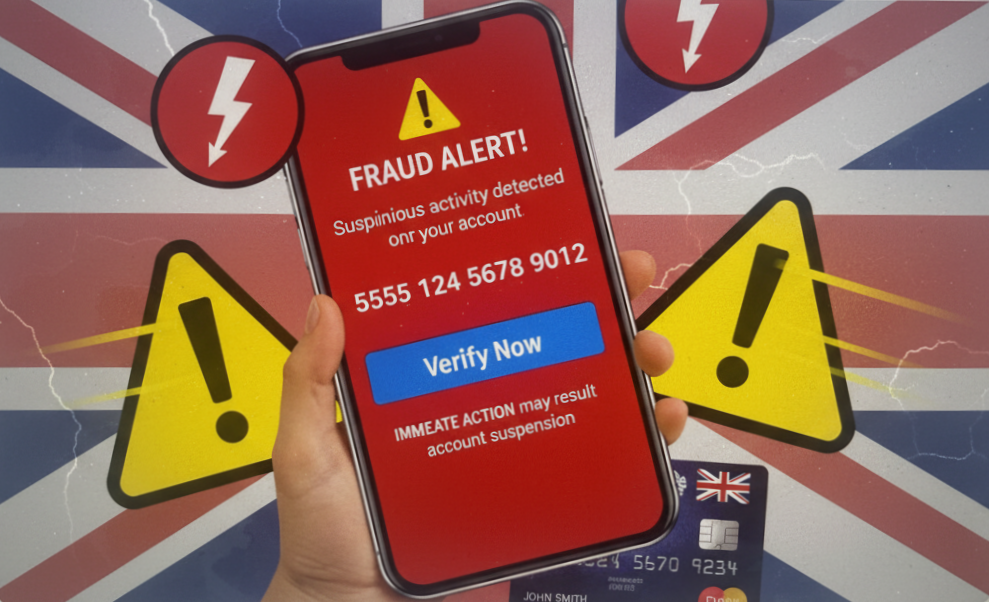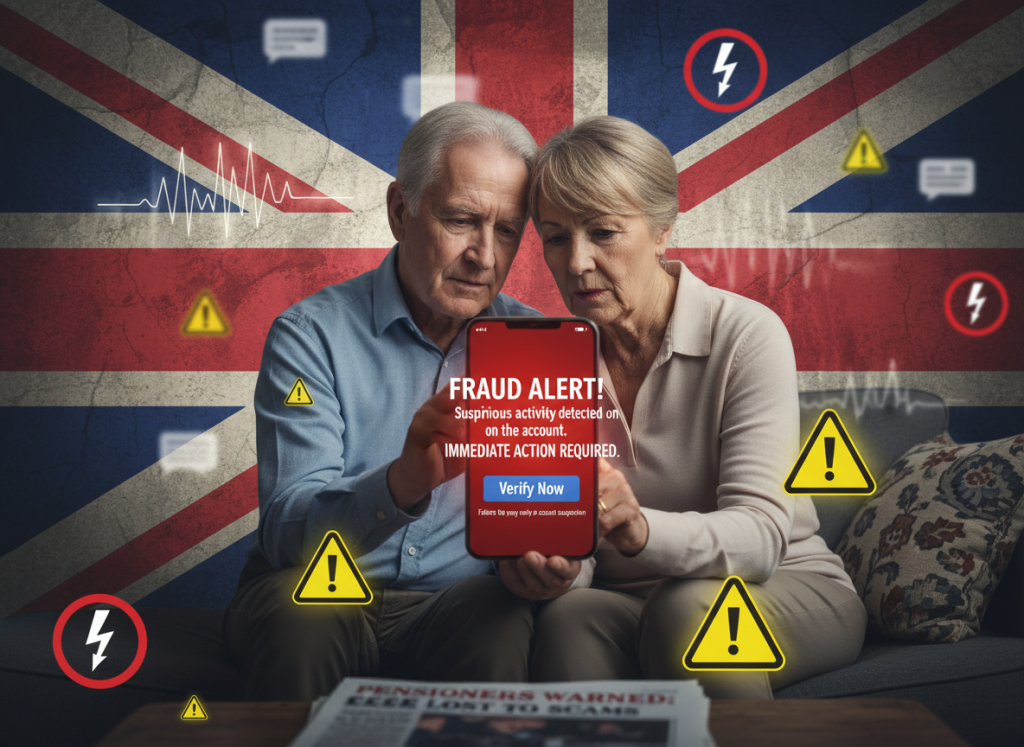

Think about what you have ordered online in the last two weeks. Dog food, perhaps. Toilet rolls. A plant for the garden. Summer clothes for a holiday. A birthday present for a grandchild. Most of us have at least one parcel on its way at any given time — and that is exactly how a parcel delivery text scam works.
Parcel delivery scams are now one of the most reported fraud types in the UK, with Action Fraud receiving thousands of reports every year.
The text arrives on your phone. It looks like it is from Royal Mail or Evri. It tells you there is a small fee — usually £1.99 or £2.99 — to release your parcel before it is returned to the sender. The amount is small enough to seem routine. And because you probably are expecting something, it feels entirely plausible.
That confusion is not carelessness. It is not foolishness. It is a scam perfectly engineered around the rhythms of modern life. In my years working in consumer finance I saw how sophisticated these operations are — and how they specifically target people who shop regularly online.
This article explains how parcel delivery text scam works, the 5 warning signs to look for, and exactly what to do if you receive one of these texts.
Table of Contents
How a Parcel Delivery Text Scam Works
The method is always the same. Only the logo changes.
Fraudsters send bulk text messages impersonating major delivery companies — most commonly Royal Mail and Evri, but also DPD, Yodel, Hermes and Amazon Logistics. The texts are designed to look identical to genuine delivery notifications, right down to the tracking number format and the sender name displayed on your phone.
The message tells you one of several things: your parcel could not be delivered, there is an unpaid customs fee, or your address details need confirming before delivery can proceed. A link takes you to a fake website — again, a convincing copy of the real thing — where you are asked to enter your card details to pay a small release fee.
That small fee is almost never the real target. What the fraudsters want are your card details. Once entered, those details are used for far larger unauthorised transactions — sometimes within minutes of you submitting them.
Royal Mail has confirmed it will never ask for payment via a text message link. Evri’s official guidance states the same. Any text asking you to click a link and pay a fee to release a parcel is a scam, regardless of how genuine it looks.
Why This Scam Is So Effective
The shopping calendar never stops. January sales roll into Valentine’s Day, then Mother’s Day, Easter, summer holiday clothing, back to school, Halloween, Bonfire Night, Black Friday, Christmas — and then the January sales begin again. For anyone buying for themselves, children and grandchildren, there is almost no month of the year when a parcel is not on its way. Scam missed parcel sms messages are deliberately timed to land when you are busy and your guard is down.
Fraudsters do not need to know your name. They do not need to know what you ordered or which courier is delivering it. They simply send millions of texts and trust that the majority of recipients will have something on its way. The law of averages does the rest.
The fee is kept deliberately small — rarely more than £2.99 — because a larger amount would trigger suspicion. At under three pounds, most people think: even if this is wrong, it is not worth the risk of missing my parcel. That reasoning, entirely understandable, is precisely what the scammer is counting on.
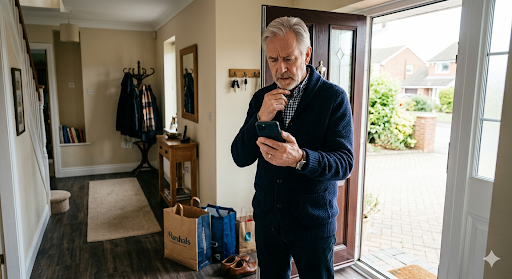
9 Warning Signs of a Parcel Delivery Text Scam
These 5 signs will help you identify a parcel delivery text scam whether the text claims to be from Royal Mail, Evri, DPD or any other carrier.
1. A Parcel Delivery Text Scam Always Asks You to Pay Via a Link
This is the single most reliable warning sign. Royal Mail, Evri and every legitimate courier will never ask you to pay a fee by clicking a link sent in a text message. If you genuinely owe a customs charge, Royal Mail sends a grey card to your door. Payment is made through their official website — not through a link in a text.
2. The Link Does Not Match the Company’s Real Website
Before clicking anything, look at the web address in the text. Royal Mail’s genuine website is royalmail.com. Evri’s is evri.com. Scam links typically use variations such as royal-mail-delivery.com, evri-parcel.co.uk, or random combinations of letters. If the address looks even slightly unusual, do not tap it. The safest way to check for missed parcels is to log directly into the courier’s official website and use their tracking tool — never via a link in a text that you are suspicious of.
3. The Text Creates Urgency
Phrases like ‘your parcel will be returned within 24 hours’ or ‘action required today’ are designed to make you act before you think. Genuine delivery notifications do not threaten immediate return of your parcel if you fail to pay within hours. Urgency in a text message is a red flag, not a reason to act faster.
4. You Were Not Expecting a Delivery From That Carrier
If the text claims to be from Royal Mail but everything you have ordered recently comes via Evri, pause. It may still be genuine — retailers use multiple couriers — but it is worth checking your order confirmation emails before paying anything. Log in directly to the retailer’s website to check your delivery status rather than using any link in the text.
5. The Sender Name Looks Right But the Number Does Not
Fraudsters can spoof the sender name displayed on your phone so the text appears to come from ‘Royal Mail’ or ‘Evri’ — even appearing in the same message thread as genuine texts from those companies. The sender name alone means nothing. If the content of the message asks for payment, treat it as suspicious regardless of what the sender name says.
Your Questions Answered
Is there a scam about packages being delivered?
Yes — parcel delivery text scams are one of the most common fraud methods in the UK right now. Criminals send fake text messages pretending to be from Royal Mail, DHL, Evri or other couriers, claiming a parcel is awaiting delivery and asking you to pay a small fee or confirm your details. No genuine courier will ever ask for payment by text message link.
What are the signs of a fake delivery notice?
The most common signs include an unexpected text about a parcel you were not expecting, a request to click a link and pay a small fee to release your delivery, a sense of urgency or a tight deadline, and a URL that does not match the official courier website. Genuine couriers will never ask for card details via a text message link. Knowing how to spot a delivery scam text before you click anything could save you from losing hundreds of pounds
How to tell if a text is from a scammer?
Check the sender number — legitimate couriers use recognisable shortcodes or named senders, not random mobile numbers. Look closely at any link in the message — scam URLs often mimic real websites with subtle misspellings. If in doubt, go directly to the courier’s official website and track your parcel there rather than clicking any link in the text.
Why did I get a message about a package I didn’t order?
Scammers send fake parcel delivery texts to thousands of numbers at random, knowing that at any given time many people will have a genuine parcel on the way and will assume the message is legitimate. You do not need to have ordered anything for the scam to work — the timing is designed to catch people off guard.
| ⚠️ The Golden Rule Royal Mail will never ask you to pay a fee via a link in a text message. Evri will never ask you to pay a fee via a link in a text message. No legitimate courier will. If a text asks you to pay to release a parcel, it is a scam. |
What to Do If You Receive a Suspicious Delivery Text
If you receive a text you are unsure about, these steps will keep you safe:
- 1. Do not tap the link in the text.
- 2. Do not call any phone number given in the text.
- 3. If you think there may be a genuine parcel waiting, go directly to the courier’s official website by typing the address yourself — royalmail.com or evri.com — and use the tracking tool there.
- 4. Check your original order confirmation email from the retailer, which will tell you which courier is being used and give you a genuine tracking link.
- 5. Forward the scam text to 7726 — this is free on all networks and reports it to your mobile provider’s spam filter.
- 6. Report it to Action Fraud at actionfraud.police.uk or by calling 0300 123 2040.
- 7. If you have been receiving suspicious calls as well as texts, read our guide to Phone Scams UK for further protection steps.
For more on suspicious calls that often accompany a parcel delivery text scam, see our guide to Phone Scams UK.
If you have already clicked a link and entered your card details, contact your bank immediately on the number on the back of your card. Do not wait. The sooner you report it, the better your chances of recovering any money taken. For more on how bank fraud works, read our guide to Bank Scams UK. You can also report any parcel delivery text scam to Action Fraud.

If You Have Already Been Caught Out
Please do not feel ashamed. A parcel delivery text scam works because it is cleverly designed around a situation that applies to almost everyone. The texts are convincing, the timing is plausible, and the amount is small enough to seem routine.
The Payment Systems Regulator now requires banks to reimburse victims of authorised push payment fraud in most circumstances. If you paid via a card or bank transfer through a scam link, tell your bank explicitly that you were the victim of a fraud and ask about reimbursement under the PSR rules. Keep a record of the text message and the website you were directed to as evidence.
| ✅ What to Do Right Now Forward any suspicious delivery text to 7726 (free on all networks). Report to Action Fraud: actionfraud.police.uk or 0300 123 2040. If you entered card details: call your bank immediately. Check your genuine deliveries via royalmail.com or evri.com directly — never via a link in a text. |
Related Reading on Honest Pensioner
6 Pension Scams Targeting Pensioners Right Now — How to Spot Them
Phone Scams UK: Could You Spot a Fake Call Before It’s Too Late?
Bank Scams UK: 2 Threats Every Pensioner Must Know About Right Now
Scams Targeting Pensioners UK: 7 Threats Fraudsters Hope You Never See
Mark has 15 years of experience in consumer finance and previously appeared as a financial commentator on BBC Sunday Breakfast. Honest Pensioner provides independent guidance for the over-55s on money, benefits, scams and wellbeing.