Key Takeaways
- Phone scams UK are now the number one fraud threat facing UK pensioners in 2026
- A new wave of AI voice cloning scams means criminals can fake a family member’s voice using just 3 seconds of audio
- The average UK adult now receives seven scam calls or texts every single month
- Even saying ‘yes’ on a scam call could give criminals enough audio to clone your voice
- National Trading Standards blocked nearly 21 million scam phone calls in just six months
- Knowing the warning signs — and what to do — could save you thousands of pounds
Introduction: The Call You Never Expected to Get
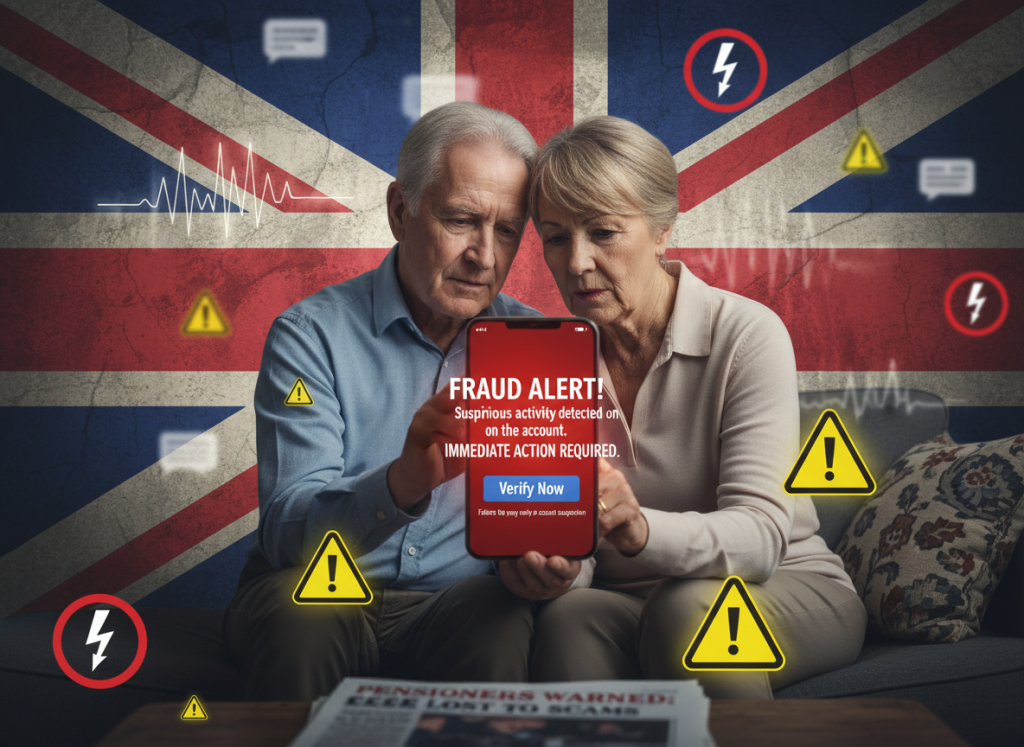
Picture this. Your phone rings. It’s your grandson. He sounds panicked — something’s happened, he needs money urgently, can you help? You can hear his voice. It sounds exactly like him. You’re worried. You act fast.
Except it isn’t your grandson. It’s a criminal using artificial intelligence to clone his voice — built from a few seconds of audio scraped from a Facebook post or a voicemail greeting.
This isn’t science fiction. According to National Trading Standards (NTS), this is happening right now — in 2026 — and UK pensioners are the primary target. The NTS confirmed in February 2026 that criminals are actively using AI voice cloning as part of organised phone scams UK operations targeting older people. They blocked nearly 21 million scam phone calls in just six months.
Phone scams UK have always been a serious threat. But in 2026, they’ve taken a genuinely alarming new turn. Criminals don’t just call and pretend to be your bank anymore. They can sound exactly like someone you love. They can use your own voice against you. And they’re getting better at it every single month.
This guide explains exactly what’s happening, what the most dangerous phone scams UK look like right now, and — most importantly — what you can do to protect yourself and the people you care about. For a broader look at consumer threats, also read our guide on consumer alerts for UK pensioners.
Phone Scams UK in 2026: What’s Actually Going On?
Let’s start with the scale of the problem. Because it’s bigger than most people realise.
According to data from National Trading Standards, the average UK adult now receives seven scam calls or texts every single month. One in five people receives them every week. Nine percent — nearly one in ten — gets a scam call or text every single day. These aren’t occasional nuisances. They’re a constant, organised assault.
And the financial damage is severe. UK pensioners lose an average of £4,000 per successful scam. For someone on a fixed pension income, that’s not just money. That’s months of essential living costs. Gone.
Why pensioners are targeted more than anyone else
Phone scams UK disproportionately target older people for several reasons. Many are at home during the day — making them more reachable by phone. Many are more likely to engage politely with a caller rather than hanging up abruptly. And many grew up in a time when a phone call from a bank or official body was treated as inherently trustworthy.
That trust — which is a virtue, not a failing — is exactly what criminals exploit. As Age UK puts it, people in later life can be particularly attractive targets for scammers precisely because they tend to be more trusting, more polite, and more likely to engage with an authoritative-sounding caller.
The New Threat: Voice Cloning and AI Phone Scams UK
This is the part that’s genuinely new — and genuinely alarming. Phone scams UK in 2026 aren’t just human fraudsters making calls. Increasingly, they’re using artificial intelligence to make those calls more convincing than ever before.
The lifestyle survey scam — and why it’s so dangerous
According to National Trading Standards, the most alarming new phone scam UK works like this. You receive a phone call from someone asking if you’d like to take part in a lifestyle survey. It seems harmless — just a few questions about your health, your interests, your finances.
But while you’re answering, two things are happening. First, your answers are being recorded and used to build a detailed profile of you — your health conditions, your financial situation, your personal details. Second, your voice is being recorded. And that recording — even just a few seconds of it — is fed into AI software that creates a clone of your voice. That clone can then be used to authorise direct debits and bank transfers without your knowledge.
Critical Warning: Never answer questions about your finances, health, or personal details on an unsolicited phone call. If someone calls claiming to conduct a survey and asks personal questions, hang up immediately. A legitimate survey company will never need your bank details, NHS number, or financial information.
The ‘can you hear me?’ trap
There’s an even simpler version of this threat. A scammer calls and asks: ‘Can you hear me?’ If you say ‘yes’, that single word — in your voice — can be recorded and used by AI software to begin building a voice clone. It can also be used to fraudulently ‘confirm’ transactions or agreements you never actually made.
The golden rule: if you answer an unexpected call and the first thing you hear is ‘can you hear me?’, or any variation of it — hang up immediately. Don’t say yes. Don’t engage.
The grandchild emergency scam
Using cloned voices, criminals now target older adults with calls that sound exactly like a grandchild or family member in distress. The ‘grandchild’ sounds panicked. There’s been an accident. They need money urgently. Please don’t tell mum and dad. Please send it now.
The emotional pressure is enormous. And because the voice sounds exactly right, even cautious people can be fooled. If you ever receive a call like this, no matter how convincing it sounds — hang up, and call your family member directly on their known number to verify.
The Most Common Phone Scams UK Pensioners Face Right Now
Beyond the new AI threats, the more traditional phone scams UK remain rife. Here are the ones to know about in 2026.
Bank impersonation calls
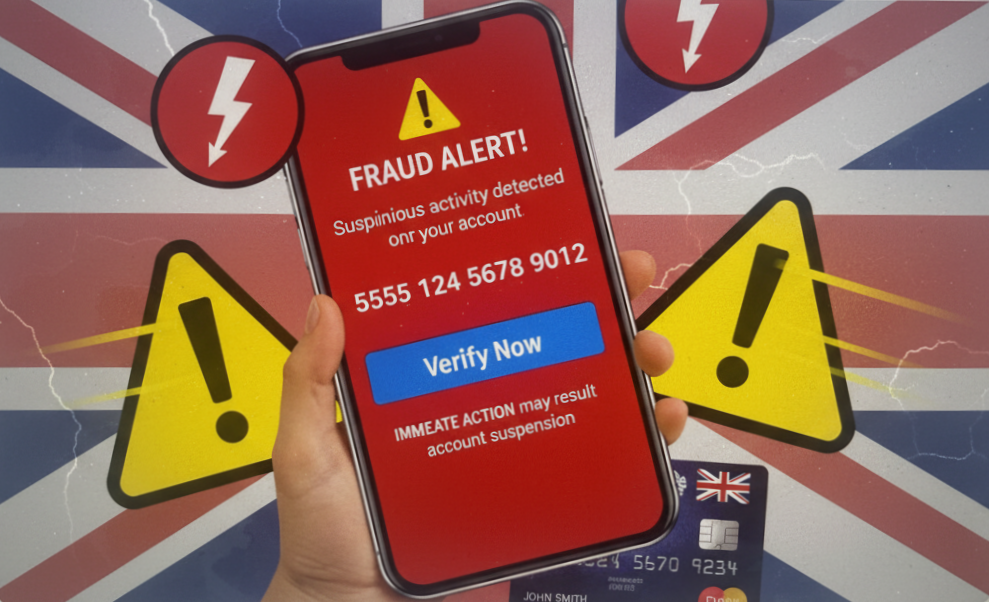
A caller claims to be from your bank’s fraud department. They say there’s been suspicious activity on your account. They need to verify your details. They may ask for your PIN, your password, or ask you to transfer money to a ‘safe account’ for protection.
Your bank will never — ever — ask for your full PIN or password over the phone. They will never ask you to transfer money to another account for safekeeping. If you receive this call, hang up and ring your bank directly using the number on the back of your card or on their official website.
HMRC tax scam calls
A recorded message or caller claims to be from HMRC. You owe unpaid tax. If you don’t pay immediately, you’ll be arrested. Press 1 to speak to an officer.
HMRC does not make unsolicited calls threatening arrest. They do not demand immediate payment over the phone. Any genuine HMRC communication will come in writing first. Hang up and report to Action Fraud on 0300 123 2040.
Computer helpdesk scams
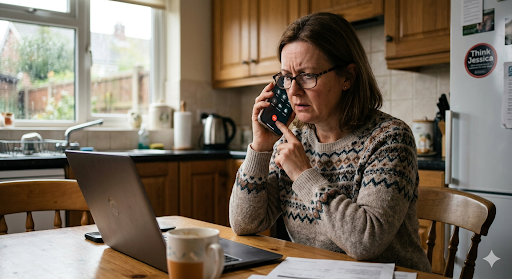
A caller claims to be from Microsoft, BT, or your broadband provider. They’ve detected a problem with your computer. They need remote access to fix it. Once they have access, they can steal your financial information, install malware, or directly access your bank accounts.
No legitimate technology company will ever call you out of the blue to tell you there’s a problem with your computer. Hang up immediately.
Investment and pension scams
A caller offers an exciting investment opportunity — high returns, limited time, guaranteed profits. Or they offer a free pension review. These are almost always scams designed to steal your savings or your pension pot. Before handing over any money or pension details, always check the firm on the FCA register. If they’re not listed, don’t proceed. Also read our guide on bank scams UK for more on financial fraud threats.
How to Spot Phone Scams UK — 10 Warning Signs
Phone scams UK are getting more sophisticated every year. But they still share common warning signs. Here’s what to look for:
- You didn’t initiate the call — any unsolicited contact should be treated with caution
- They create urgency — ‘act now’, ‘today only’, ‘you’ll be arrested if you don’t’
- They ask for personal information — PIN numbers, passwords, NHS number, National Insurance number
- They ask you to transfer money to a ‘safe account’
- They claim to be from a bank, HMRC, police, or tech company
- They discourage you from calling anyone else — ‘don’t tell your family’, ‘don’t call the bank’
- They ask you to buy gift cards or vouchers as payment
- There’s background noise suggesting a call centre
- The number is withheld or appears to be from abroad
- Something just feels wrong — trust your instincts
Honest Pensioner Rule: If in doubt, hang up. A legitimate caller will understand. A scammer will pressure you to stay on the line. The moment you feel pressured — that IS the warning sign.
What to Do If You Think You’ve Received a Phone Scam UK Call
Knowing how to respond in the moment — and afterwards — can make an enormous difference.
During the call
- Hang up. You don’t owe politeness to a criminal.
- Don’t say ‘yes’ to any question on an unexpected call
- Never give personal, financial or security information
- Never transfer money or buy gift cards at someone’s request on a phone call
- If you’re worried it might be genuine, hang up and call the organisation back using the number from their official website — not the number they gave you
After the call
- Report it to Action Fraud online or by calling 0300 123 2040
- If you’ve given bank details, call your bank immediately using the number on the back of your card
- Report nuisance calls to Ofcom at ofcom.org.uk
- Tell a family member or trusted friend what happened
- If you’ve lost money, also contact your local police and ask for a crime reference number
Practical protection steps
- Register with the Telephone Preference Service (TPS) at tpsonline.org.uk — it reduces unsolicited marketing calls
- Consider a call blocker device for your landline — many councils offer these free or subsidised to older residents
- Never answer calls from numbers you don’t recognise — let them go to voicemail
- Talk to friends and family about phone scams UK so they know the risks too
- Visit Friends Against Scams to take their free online awareness training
Protecting the People You Love From Phone Scams UK
If you have an elderly parent, a friend living alone, or a neighbour who might be vulnerable to phone scams UK, there are practical things you can do to help.
Talk to them about the scams in this article — not in a frightening way, but in a matter-of-fact, ‘did you know’ kind of way. The Friends Against Scams programme has free resources specifically designed for this purpose.
You might also help them set up a call blocker, check whether their council offers free devices, and make sure they know to call you before acting on anything that makes them feel pressured or uncertain.
And if you’re concerned about your own online safety more broadly, also read our guide on consumer alerts for UK pensioners which covers the full range of digital and financial threats facing older people in the UK right now.
Frequently Asked Questions About Phone Scams UK
Q1: How do I know if a phone call is a scam?
The most reliable warning signs of phone scams UK are urgency, requests for personal information, and pressure not to hang up or consult anyone else. Legitimate organisations — banks, HMRC, the NHS — never ask for your PIN or password over the phone. They never ask you to transfer money to a safe account. They never threaten immediate arrest or legal action unless you act right now. If any of those things happen, it’s a scam. Hang up, and if you’re worried, call the organisation directly using the number from their official website.
Q2: What is voice cloning and how does it work?
Voice cloning is when criminals use artificial intelligence to create a convincing replica of someone’s voice. According to National Trading Standards, fraudsters can now create a voice clone from as little as 3 seconds of audio — taken from a voicemail, a social media video, or a phone call. That cloned voice can then be used to call a victim’s family members pretending to be in distress, or to simulate verbal consent for bank transfers and direct debits. It is one of the most dangerous new developments in phone scams UK and is currently being used in organised criminal operations targeting older people.
Q3: What should I do if I’ve already given my bank details to a scammer?
Act immediately. Call your bank using the number on the back of your card — not any number the caller gave you — and tell them what happened. Ask them to freeze your account and reverse any transactions if possible. Then report the incident to Action Fraud on 0300 123 2040 and ask for a crime reference number. If money has left your account, your bank is required under the new Authorised Push Payment (APP) reimbursement rules to investigate and may be required to reimburse you. Don’t delay — the sooner you act, the better your chances of recovering lost funds.
Q4: Can I stop scam calls reaching me altogether?
You can significantly reduce them, though not eliminate them entirely. Register with the Telephone Preference Service (TPS) at tpsonline.org.uk — this reduces legitimate marketing calls. For nuisance and scam calls, a call blocking device or service is the most effective tool. Many councils offer these free or subsidised to older residents — ask your local council. Your phone provider may also offer call blocking services. Ofcom provides guidance on dealing with unwanted calls on their website. And remember — you’re never obliged to answer a call from a number you don’t recognise.
The Bottom Line: Your Best Defence Is Knowing What to Look For
Phone scams UK have always been a serious threat. But in 2026, with AI voice cloning now in the hands of organised criminal gangs, they’ve become something genuinely new and alarming. A criminal can now sound exactly like your grandchild, your bank manager, or a police officer. They can use your own voice to authorise payments you never made.
But here’s the thing. Knowledge is your single most powerful defence. Scams work because they catch people off guard. Once you know what to look for — the urgency, the requests for personal information, the pressure not to hang up — they lose much of their power.
So share this article. Tell a friend. Talk to a family member. Because the best protection against phone scams UK isn’t a piece of software or a security device. It’s a conversation. And at Honest Pensioner, we’re here to make sure you have the information you need — clearly, honestly, and without jargon.
Your Action Steps This Week
- Talk to a family member or friend about the voice cloning scam — especially if they have elderly relatives
- Register your number with the Telephone Preference Service at tpsonline.org.uk
- Ask your local council whether they offer free call blocker devices for older residents
- Save the Action Fraud number in your phone: 0300 123 2040
- Visit Friends Against Scams and complete their free online awareness training — it takes 20 minutes
- Check any investment or financial firm on the FCA register before handing over any money
Further Reading on Honest Pensioner
- Consumer Alerts for UK Pensioners: 7 Warnings Every Retiree Needs to Act On
- Bank Scams UK: 2 Threats Every Pensioner Must Know About
- Equity Release UK: The Honest Pros and Cons
- Best Savings Accounts for UK Pensioners 2026