
Care home costs UK 2026 are forcing thousands of families to confront one of the most difficult financial questions of later life — and most people don’t know where to start. Understanding care home costs UK 2026 early gives you far more options than waiting until a crisis forces your decission.
Will I have to sell my house to pay for care? It’s one of the most searched questions among over-55s in the UK — and frankly, one of the most misunderstood. The short answer is: sometimes, but not always. And there are far more protections in place than most people realise.
What’s not in doubt is the cost. Care home costs UK 2026 figures make sobering reading. The average residential care home now runs to around £1,300 a week, and nursing home fees can top £1,600 a week — that’s over £78,000 a year before you’ve bought a single birthday card.
For anyone living on a fixed pension income, those numbers can feel terrifying. But before panic sets in, it’s worth understanding exactly how the system works — who pays, what the thresholds are, what happens to your home, and crucially, what you can do to protect yourself and your family.
That’s exactly what this article is here to explain. No jargon, no sales pitch. Just straight answers.
Care Home Costs UK 2026: What Are the Actual Figures?
Let’s start with the numbers. Fees vary enormously depending on the type of care you need, where you live, and the individual home’s facilities.
| Type of Care | Weekly Cost (2026) | Annual Estimate |
| Residential care home | £800 – £1,300 | £41,600 – £67,600 |
| Nursing home | £1,000 – £1,600 | £52,000 – £83,200 |
| London / South East (nursing) | £1,750+ | £91,000+ |
| Dementia specialist care | £1,200 – £1,800 | £62,400 – £93,600 |
These figures are averages — your experience will vary. London and the South East are consistently the most expensive, while the North East, Yorkshire and parts of Wales tend to be more affordable.
There’s also an important difference between a residential care home and a nursing home. A residential home provides personal care — help with washing, dressing, meals, and daily life. A nursing home does all of that plus 24-hour care from qualified nurses for people with more complex medical needs. The distinction matters, both for your needs and your wallet.
What’s included in the fees?
Most care home fees cover accommodation, meals, personal care, and activities. But watch out for extras that aren’t always included:
- Chiropody and hairdressing appointments
- Transportation to medical appointments
- Guest meals and private telephone use
- Contents insurance for personal belongings
- Wi-Fi and TV packages
Always ask for a full written breakdown of what’s included before signing anything. Some homes charge a headline rate that looks reasonable, then add several hundred pounds a month in extras.
Who Pays for Care Home Fees in the UK?
This is where it gets important. Whether the council contributes to your care home fees — or you pay everything yourself — depends entirely on a financial assessment of your savings, assets, and income. The assessment is called a means test, carried out by your local council.
Here’s how the thresholds work in England in 2026:
| Savings / Assets (England) | What Happens | Who Pays? |
| Over £23,250 | Full self-funder | You pay everything |
| £14,250 – £23,250 | Partial council support | You + council share costs |
| Under £14,250 | Maximum council support | Council pays (you contribute income) |
Scotland, Wales and Northern Ireland have different thresholds — Wales in particular is notably more generous, with the upper limit set at £50,000. If you’re outside England, check the rules via GOV.UK or Age UK.
What counts as an ‘asset’?
Care home costs UK 2026. Your savings, investments, and most property you own are counted. Your income — state pension, private pension, rental income — is also assessed separately.
Crucially, your main home is NOT automatically counted if any of the following people still live there:
- Your spouse or civil partner
- A dependent child
- A close relative aged 60 or over
- A relative who is incapacitated
So if your wife or husband remains living in the family home, it cannot be included in the financial assessment while they’re there. That’s a vital protection that many families are simply unaware of.
Important Warning: The rules around ‘deliberate deprivation of assets’ are strict. If the council believes you’ve given away money or property specifically to reduce your care costs, they can still include it in your assessment — even if it was transferred years ago. Always take legal advice before making large gifts or transferring property.
Could You Really Be Forced to Sell Your Home?
This is the big one. The honest answer is: possibly, eventually — but not immediately, and not without options.
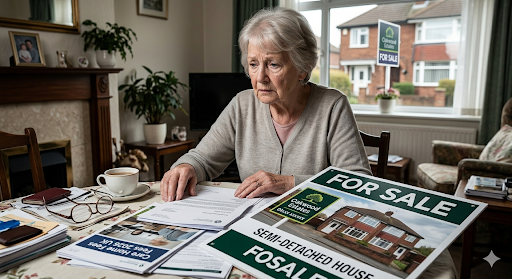
If you’re single and move into a care home, and no qualifying person lives in your property, your home will typically be included in the financial assessment after 12 weeks. This is one of the most misunderstood aspects of care home costs UK 2026 — many families assume the worst immediately, when in fact several options exist to delay or reduce the impact.
Option 1: Deferred Payment Agreement (DPA)
A Deferred Payment Agreement is one of the most useful but least-known tools available. Under a Deferred Payment Agreement, the council pays your care home fees and places a legal charge on your property — similar to a mortgage. The debt is only repaid when you die, sell the home, or choose to repay early.
This means you can stay in a care home without selling your house during your lifetime. Your family may still inherit a reduced estate, but you won’t be forced into a rushed sale. Most councils are legally required to offer DPAs to homeowners who meet the criteria. Ask your council about this before assuming the worst.
Option 2: Renting out your property
Another option is to rent out your former home and use the rental income to contribute to care costs. If the rental income is sufficient, it could reduce or even cover what you need to pay — without any sale required. There are tax implications to consider, and you’d need to ensure the property is properly managed — but it’s an avenue well worth exploring with a financial adviser.
Option 3: The 12-week property disregard
When you first move into a care home, your property is automatically disregarded from the financial assessment for the first 12 weeks. During this period, the council contributes to your fees as if you didn’t own a property. This gives families some breathing space to make decisions without immediate financial pressure. Use that time wisely — it’s not long.
Could the NHS Pay for Your Care Home Instead?
Here’s something that genuinely shocks many families: if your primary need for care is health-related rather than social care, the NHS may fund your care home placement entirely — regardless of your savings or assets.
This is called NHS Continuing Healthcare (CHC). If you qualify, the NHS pays the full cost of your care home. You don’t contribute a penny from your savings or pension, and your home isn’t touched.
Who qualifies for NHS Continuing Healthcare?
There’s no fixed list of conditions that qualify — it’s based on the nature and complexity of your needs, not just your diagnosis. People who are often eligible include those with:
- Advanced dementia with complex behavioural needs
- Serious neurological conditions such as Parkinson’s or MS
- Complex wound or continence needs requiring nursing expertise
- Rapidly deteriorating or terminal conditions
The assessment is carried out by a multidisciplinary NHS team. If you or a family member are in care or about to move into care, always request a CHC assessment — especially if health needs are significant. Many families who should qualify are never told this option exists. Read the full guidance on the NHS Continuing Healthcare page.
Important Tip: If your loved one was previously in a care home and paid their own fees, but their condition was primarily health-related, you may be able to apply for a retrospective CHC review — and potentially reclaim fees already paid. This can run into tens of thousands of pounds. Get specialist advice if you think this applies.
Other Help With Care Home Costs UK 2026 You Might Be Missing
Attendance Allowance
If you’re a self-funder — paying your own care home costs UK 2026 — you may still be entitled to Attendance Allowance, a non-means-tested benefit worth up to £108.55 per week in 2026. That’s over £5,600 a year you could be putting towards your fees. Importantly, Attendance Allowance stops after 28 days if the council is funding your care — but self-funders can claim it and keep it. Many people don’t.
Pension Credit
If you’re on a low income and don’t qualify for full council funding, don’t overlook Pension Credit. It tops up your weekly income to a minimum level and acts as a gateway to a range of other support. If your savings have been spent down on care fees, you may now qualify even if you didn’t before.
Top-up fees — and your rights
If the council is funding your care but you want to stay in a home that charges more than the council’s standard rate, a family member can volunteer to pay the difference — known as a top-up fee. But know your rights. Top-ups must come from a third party, not from your own assessed income. And if the person paying can no longer afford it, the council must help find an alternative placement. You cannot be evicted simply because a top-up arrangement falls through.
Quick Checklist — If You or a Family Member May Need Care
- Ask your council for a Care Needs Assessment and a financial (means) assessment
- Check whether a spouse or qualifying relative lives in the property before assuming your home is at risk
- Request a 12-week property disregard if moving into care soon
- Ask about a Deferred Payment Agreement if you own property
- Request an NHS Continuing Healthcare assessment if health needs are complex
- Claim Attendance Allowance if you’re self-funding
- Set up or review your Lasting Power of Attorney now, before it’s needed
- Speak to an independent financial adviser who specialises in care fees
Act Now — Before You Need To
One thing experienced care fee advisers say repeatedly is this: the families who cope best are the ones who planned before the crisis hit.
If you don’t yet have a Lasting Power of Attorney in place, make that your first priority. If you or a family member loses mental capacity before an LPA is registered, no one has the legal authority to manage finances, make care decisions, or access bank accounts. It’s a situation that causes enormous stress and delay at an already difficult time.
It’s also worth speaking to an independent financial adviser who specialises in later-life and care fee planning of care home costs UK 2026. They can model the costs, identify which benefits you’re entitled to, and help structure your finances in a way that protects as much as possible for your family.
And watch out for scams in this area. Cold callers offering ‘care fee avoidance schemes’ or ‘asset protection trusts’ are often either ineffective or fraudulent — particularly since the care home costs UK 2026 changes have attracted a new wave of unscrupulous operators. Our guide to care fee scams covers the red flags to watch for.
Your Questions Answered
Q1: Who decides how much I pay for care home costs UK 2026?
Your local council carries out a means test — a financial assessment of your savings, assets, and income. If your assets exceed £23,250 in England, you’ll be expected to fund your own care. Below £14,250, the council contributes the maximum. Between those figures, costs are shared. Scotland, Wales and Northern Ireland operate different thresholds — always check the rules for your nation.
Q2: Will the council automatically tell me about Deferred Payment Agreements and NHS Continuing Healthcare?
Unfortunately, not always. Councils are legally required to inform you about Deferred Payment Agreements, but in practice this doesn’t always happen proactively. NHS Continuing Healthcare assessments should be offered if there’s a reasonable indication you might qualify — but again, families often have to ask. Be proactive. Ask specifically about both options at every stage of the care planning process.
Q3: If my partner still lives in our house, is it completely protected?
Yes — while a qualifying person (spouse, civil partner, dependent child, or relative over 60) continues to live in your main home, the property cannot be included in your financial assessment. However, when that person also eventually passes away or moves out, the property could then be assessed. It’s often described as the ‘second death’ problem, and it’s worth planning for with a financial adviser.
Q4: Can I give away my money or property now to protect it from care fees later?
This is a very common question — and a very risky strategy. If the council believes you have deliberately given away assets to reduce your care costs, they can treat those assets as if you still own them. This is called ‘deliberate deprivation of assets’ and there is no time limit on how far back the council can look. Seek qualified legal advice before making any large gifts or transfers.
Q5: What happens if I run out of money while in a care home?
If you’ve been self-funding your care and your savings fall to £23,250 (England), you can approach your council for a financial assessment and apply for council support. The care home must give the council reasonable notice before any attempt to discharge you, and you must not be moved without alternative care being arranged. You have rights — use them. Speak to Age UK or Citizens Advice if you’re unsure.
The Bottom Line
Care home costs UK 2026 are genuinely significant — there’s no sugarcoating that. But being forced to sell your home is far from inevitable, and there are more protections, exemptions, and funding options available than most people realise. Getting to grips with care costs UK 2026 now – before you need care – is one of the most important financial steps any family can take
The key is to understand the system before you need it. Know the thresholds. Know your rights. Explore every option — from Deferred Payment Agreements and NHS Continuing Healthcare, to Attendance Allowance and Pension Credit. And get proper, independent advice from someone who specialises in this area.
Nobody wants to think about needing care. But a bit of honest preparation now can save your family an enormous amount of financial pain — and an enormous amount of heartache — down the line.
Understanding care home costs UK 2026 is essential planning for every family with older relatives in the UK
Take Action Today
For free, impartial guidance on care costs and funding, visit the MoneyHelper care costs guide or Age UK’s paying for care guide. To find a specialist care fees adviser, search the Society of Later Life Advisers at solla.org.uk.
Found this article useful? Share it with someone who’s facing these decisions. The more people who understand how the system really works, the better.
Honest Pensioner is an independent personal finance blog for the over-55s. This article is for general information only and does not constitute financial or legal advice. Always consult a qualified independent financial adviser or solicitor before making decisions about care funding or asset transfers.