A section 75 claim lets you get your money back from your credit card company when a purchase goes wrong – even if the seller has gone bust. It’s one of the most useful consumer rights in the UK, yet plenty of people have never heard of it.
Here’s how it works, what’s covered and how to make a claim.
What Is Section 75?
Section 75 of the Consumer Credit Act 1974 makes your card provider equally responsible with the seller if something goes wrong. In plain terms, if the shop won’t put things right, you can go to your credit card company instead, This is known as making a section 75 claim.
That matters most when a business has gone into administration. The seller may have vanished, but your card provider hasn’t.
What Is Covered Under Section 75?
Credit card purchases are protected when:
- the item or service cost more than £100 and no more than £30,000
- you paid at least part of it on a credit card – even just the deposit
- the goods or services were faulty, not as described, or never arrived
The £100 limit applies to the price of a single item, not what went on your card. Buy a £1,200 sofa, put only a £50 deposit on your credit card, and the whole £1,200 is protected.
It covers problems with goods and services of all kinds: holidays, flights, furniture, building work and more.
Good news for buy now, pay later users: since 15 July 2026, plans from lenders such as Klarna, Clearpay and PayPal Pay in 3 are regulated, so purchases between £100 and £30,000 now get Section 75 protection too. Plans taken out before that date aren’t covered. See the FCA’s buy now, pay later guide for details.
What Isn’t Covered?
- debit card purchases
- single items costing £100 or less
- PayPal purchases – whether you fund them by card or PayPal balance, PayPal usually breaks the legal link between lender and seller
- money paid to a middleman, such as some booking agents, rather than the actual supplier
- bank transfers – if you were tricked into one, see our guide to Phone Scams
Section 75 and Chargeback: What’s the Difference?
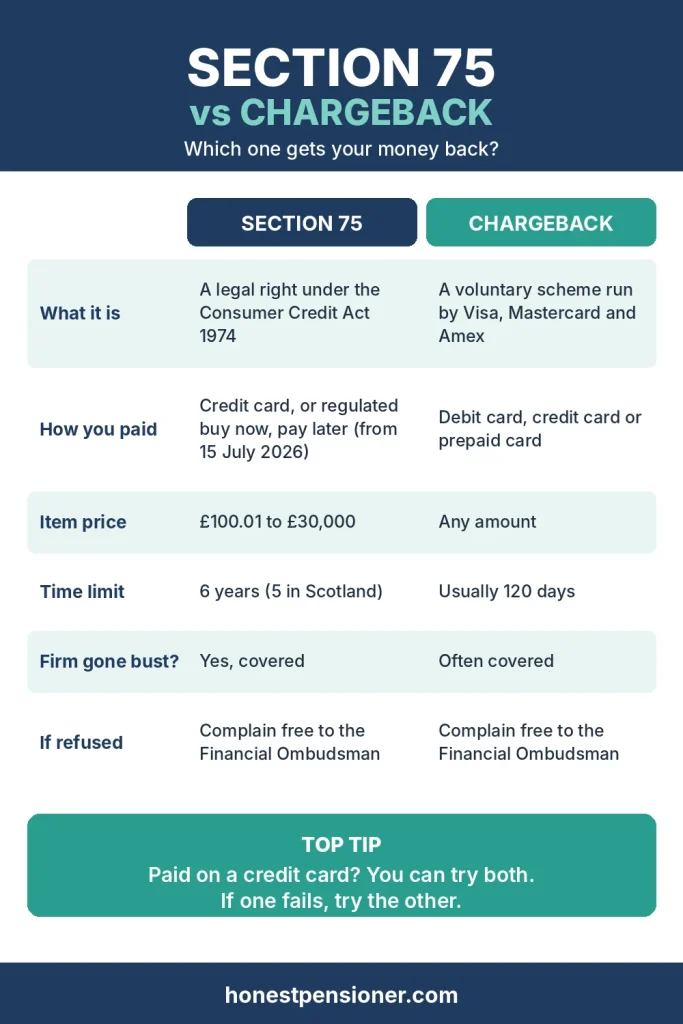
If you paid by debit card, or the item cost under £100, try chargeback instead. Chargeback isn’t a legal right – it’s a voluntary scheme run by Visa, Mastercard and Amex – and you usually need to ask within 120 days.
Credit card purchases can use either route. If one fails, try the other.
Making a Section 75 Claim: Step by Step
- Contact the seller first. Give them a fair chance to put things right, and keep a record.
- Decide what you want. A refund, a repair or the cost of putting things right.
- Gather your evidence. See the list below.
- Contact your card provider. Most have an online form to start a section 75 claim. Otherwise, write to them.
- Be clear and brief. State what you bought, when, what went wrong and what you’re asking for.
- Allow up to eight weeks. That’s how long the provider has to give a final answer.
- Escalate if refused. Complain to the Financial Ombudsman Service free of charge.
What Evidence Do You Need?
- your card statement showing the payment
- the receipt, invoice or order confirmation
- photos of faulty goods or poor workmanship
- emails and letters with the seller
- an independent report for expensive items, such as from an engineer
The stronger your paperwork, the more successful your claim is likely to be.
What Is the Time Limit?
Generally, you have six years from when the problem arose to make a section 75 claim (five years in Scotland). Don’t leave it that long, though – evidence goes missing and memories fade.
Frequently Asked Questions
Can I claim if the company has gone bust?
Yes. This is exactly when Section 75 is most valuable.
Do I need to have paid the full amount on my credit card?
No. Paying even part of the price on your card is enough.
What can you claim under section 75?
Your money back, a repair, or the reasonable cost of putting things right – including some knock-on losses.
Does it cost anything to claim?
No. Making a section 75 claim with your card provider is free, and so is the Financial Ombudsman.
Disclaimer: This article is general information, not legal or financial advice. Rules can change, so check your own situation with your card provider, Citizens Advice or the Financial Ombudsman Service. Information correct as of October 2026.