
When the time comes to think about a move, most families jump straight to care homes — without ever properly exploring sheltered housing. Yet understanding the real difference in sheltered housing vs care home costs could save you or your loved one tens of thousands of pounds. The average care home now costs over £1,300 per week — while sheltered housing can cost as little as £75 to £350 per week. That is a difference of up to £1,000 a week, or more than £50,000 a year.
In this plain-English guide, we compare sheltered housing vs care home costs in detail — laying out exactly what each option costs, what you actually get for your money, and the hidden charges nobody warns you about — so you can make the right decision for your family.
| 💡 KEY FIGURES AT A GLANCE (2026) Sheltered housing: £75–£350 per week (rent + service charge) Residential care home: £1,000–£1,400 per week Nursing care home: £1,200–£1,800 per week Potential annual saving by choosing sheltered housing: up to £50,000+ Self-funding threshold (England): assets above £23,250 |
What Is Sheltered Housing?
Before comparing sheltered housing vs care home costs, it helps to understand exactly what each option involves. Sheltered housing — sometimes called retirement housing — is self-contained accommodation designed for older people, usually aged 55 or over, who want to live independently but with a little extra support nearby.
You have your own front door, your own kitchen, and your own life. You cook your own meals, manage your own routine, and come and go as you please.
Most sheltered housing schemes include:
- An emergency alarm system you can use 24 hours a day
- A scheme manager or warden who checks in and responds to emergencies
- Communal spaces such as a lounge, garden, or laundry room
- Social activities and events to reduce isolation
- Building maintenance and security managed on your behalf
Crucially — sheltered housing does not include personal care such as help with washing, dressing, or medication. If you need that kind of support, you can arrange it separately through your local council or a private care agency.
What Is a Care Home?
A care home provides accommodation alongside personal care — help with washing, dressing, meals, medication, and mobility. Staff are on site around the clock. There are two main types:
- Residential care home — provides personal care but not nursing. Suited to people who need help with daily tasks but are not medically complex
- Nursing home — provides personal care plus on-site registered nursing. Suited to people with serious medical conditions requiring clinical oversight
Care homes are regulated and inspected by the Care Quality Commission (CQC), which rates them as Outstanding, Good, Requires Improvement, or Inadequate. Sheltered housing is not CQC regulated.
Sheltered Housing vs Care Home Costs: The Real Figures for 2026
Here is a clear side-by-side breakdown of what you can expect to pay in 2026:
| Sheltered Housing | Care Home | |
| Weekly cost | £75–£350 (rent/service charge) | £1,000–£1,800 |
| Annual cost | £3,900–£18,200 | £52,000–£93,600 |
| Independence | High — your own front door | Low — shared staff care |
| Personal care | Arranged separately | Included |
| Meals provided | No (you cook) | Yes (included) |
| Min. age | Usually 55+ | No minimum |
| CQC regulated | No | Yes |
| Property ownership | Can buy or rent | Rent only |
| Exit fees | Possible (check lease) | Usually none |
Sources: Lottie Care Home Costs 2026, Tiggo Care Sheltered Housing Guide.
What Do Sheltered Housing Costs Actually Include?
When comparing sheltered housing vs care home costs, it is important to understand exactly what you are paying for with sheltered housing. The total cost has several components:
Rent or Mortgage
If you rent through a council or housing association, monthly rents typically range from £300 to £700 per month. Private sheltered housing rents start from around £600 per month and can exceed £1,500 per month in London.
Service Charge
On top of rent, you pay a service charge covering communal maintenance, cleaning, grounds, building insurance, the scheme manager, and the emergency alarm system. According to Lottie, the average weekly service charge is £120.93, or £524 per month. In central London, service charges can exceed £400 per month.
Your Own Bills
Unlike a care home, you continue to pay your own energy bills, council tax, water rates, and contents insurance. Budget an additional £200–£400 per month for these costs depending on your usage and location.
Exit Fees — The Hidden Charge Nobody Warns You About
| ⚠️ WARNING: Exit Fees Many private sheltered housing schemes charge an exit fee — sometimes called a deferred management fee — when you sell the property or leave. This can be anywhere from 10% to 30% of the purchase price. On a £200,000 property, that is up to £60,000 taken from your estate when you move on. Always ask about exit fees before signing anything — and get independent legal advice. |
What Do Care Home Costs Actually Include?
Care home weekly fees typically include accommodation, all meals, personal care, activities, and building maintenance. However, extras are often charged separately:
- Hairdressing and chiropody
- Trips out and entertainment
- Phone and internet access
- Specialist equipment or therapies
- Top-up fees if the council’s rate doesn’t cover the home you choose
According to CareHomeGuide, self-funders typically pay £200–£400 more per week than council-funded residents at the same home. If the council funds your care but you want a more expensive home, a family member may need to pay a top-up fee.
For a full guide on care home funding, read our article on care home costs.
Who Pays for Care Homes — and Does the Council Help?
Understanding who pays is central to any sheltered housing vs care home costs comparison. In England, if your total assets — including savings, investments, and the value of your home — exceed £23,250, you are expected to fund your own care. This is known as self-funding.
Below this threshold, your local council may contribute. Your home is included in the means test unless your spouse or civil partner still lives there, or a qualifying relative such as a dependent over 60 remains in the property. For a full explanation of your rights, read our guide on can my family stay in my house if I go into a care home.
Sheltered housing is means-tested differently — the value of your home is generally not included in any financial assessment for sheltered housing because you are still living in your own home.
| ✅ KEY POINT If you move into sheltered housing, your existing property is not assessed for care funding purposes — because you have sold or left it to move in. The means test only applies to care homes. This is one of the most significant financial advantages of sheltered housing over a care home for people with property. |
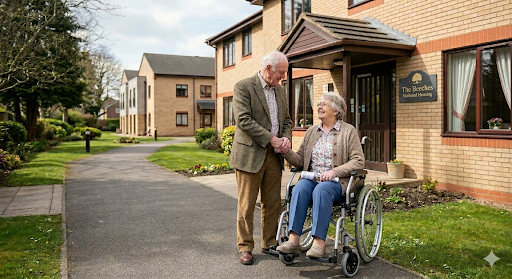
Sheltered Housing or Care Home — Which Is Right for You?
The honest answer depends entirely on the level of care needed. Here is a plain-English guide:
| ✅ SHELTERED HOUSING MAY BE RIGHT IF: ✓ You can manage most daily tasks independently ✓ You want your own front door and private space ✓ You would benefit from community and companionship ✓ You want emergency support available but not constant care ✓ You are concerned about the cost of a care home ✓ You are aged 55 or over and planning ahead |
| ✅ A CARE HOME MAY BE RIGHT IF: ✓ You need regular help with washing, dressing, or medication ✓ You have a medical condition requiring nursing oversight ✓ You are no longer able to live safely alone even with support ✓ You need 24-hour supervision for safety or dementia ✓ Managing your own meals and household is no longer possible |
Don’t Forget Extra Care Housing — The Middle Ground
There is a third option that many families never consider when weighing up sheltered housing vs care home costs: extra care housing, sometimes called assisted living or very sheltered housing. This sits between sheltered housing and a care home.
Extra care housing offers:
- Your own self-contained flat with a private front door
- On-site care staff available when needed — but not living with you
- Meals available in a communal dining room but not compulsory
- CQC regulated care element
- Costs typically between sheltered housing and a full care home
For someone who needs more support than sheltered housing offers but is not yet ready for a full care home, extra care housing can be the ideal — and far more affordable — solution.
Your Questions Answered
Q: Can I get Housing Benefit to help with sheltered housing costs?
Yes — if you rent sheltered housing and are on a low income, you may be eligible for Housing Benefit to help cover the rent. When weighing up sheltered housing vs care home costs, this benefit can make sheltered housing significantly more affordable. Since April 2016, Housing Benefit no longer covers service charges for support services in sheltered housing, but it does still cover the rent element. Contact your local council or use the GOV.UK benefits calculator to check your eligibility.
Q: Does Attendance Allowance help with sheltered housing costs?
Yes — Attendance Allowance of up to £108.55 per week (2026 rate) can be used towards any care costs, including care arranged alongside sheltered housing. Unlike care home residents, sheltered housing residents continue to receive Attendance Allowance regardless of council involvement. Read our full guide on Attendance Allowance to check if you qualify.
Q: Can I keep my current home and move into sheltered housing?
You can, but most people sell or vacate their current home when moving into sheltered housing. If you rent out your current property, the rental income will be assessed as part of any benefits calculation. Seek independent financial advice before making this decision.
Q: What happens if my needs increase while I’m in sheltered housing?
You can arrange additional care from external providers to come into your sheltered housing as your needs grow. If your needs eventually exceed what can be supported in sheltered housing, you may need to consider extra care housing or a care home at that point. Many people remain in sheltered housing for many years with gradually increasing care packages.
Your Action Checklist
| ☐ BEFORE YOU DECIDE — DO THIS FIRST ☐ Get a care needs assessment from your local council — this is free and tells you what level of care is actually needed ☐ Visit at least two sheltered housing schemes in your area before assuming a care home is needed ☐ Ask every sheltered housing provider about exit fees before signing anything ☐ Check whether your council has a waiting list for sheltered housing — social sheltered housing is cheaper ☐ Check Attendance Allowance eligibility — up to £108.55 per week tax-free ☐ Check Pension Credit eligibility — this unlocks other financial support ☐ If a care home is needed, check whether a Deferred Payment Agreement means you do not have to sell your home immediately ☐ Get independent financial advice from a SOLLA-accredited adviser before self-funding care |
The Bottom Line
When you compare sheltered housing vs care home costs, the difference is stark — and the right choice depends entirely on what level of care is genuinely needed. Sheltered housing offers independence, community, and a fraction of the cost of a care home. A care home provides round-the-clock personal care for those who truly need it.
The biggest mistake families make is assuming a care home is the only option without ever properly exploring sheltered housing. When you look at sheltered housing vs care home costs side by side, the potential saving is enormous.
For many older people, sheltered housing — or extra care housing — is the better, more affordable, and more dignified choice.
For more guidance on housing and care decisions, explore our Housing & Care section. And if you are worried about how care would be funded, read our guide on Power of Attorney — because having the right legal documents in place before you need them is essential.