If you watched GB News this weekend, you may have heard that working two days a week after you retire can cut your dementia risk by 40%. The presenters liked the idea, apart from “the work bit”.
Good news: you do not need to dust off your CV. I spent 15 years as a finance adviser reading the small print, and here at Honest Pensioner I have done the same with this study. The real message about dementia risk after retirement is simpler, and a lot more enjoyable, than the headline.
In this guide, I explain what the study found, why the first years of retirement matter, and the simple, low-cost steps that can lower your dementia risk after retirement.
Dementia Risk After Retirement: The Study in Plain English
US researchers followed nearly 14,000 older people. Those who kept doing some part-time work through their 60s and early 70s were less likely to develop dementia later on. That is where the TV figure of “40%” came from.
Two things the headline left out. The study did not say “two days a week”. And retiring earlier or later made little difference. What seemed to matter was staying busy and engaged, rather than stopping dead.
So the question is not “should I go back to work?” It is “what am I doing to keep my brain busy?”
Why Retirement Can Be a Risky Time for the Brain
Work quietly does a lot of jobs besides paying the bills:
- Routine: a reason to get up, get dressed and get out of the house.
- Problem-solving: small daily puzzles, from awkward customers to new computer systems.
- Company: colleagues, customers and the general chatter of the day.
- Movement: even an office job gets you walking to the bus or up the stairs.
Stop all of that overnight and, for some people, their world shrinks to the sofa and the television. With no daily problems to solve, it is possible the brain is no longer being tested in the way it used to be. The answer is not necessarily a job. It is replacing what the job used to give you.
Many people say the first year of retirement feels like a long holiday. The trouble starts when the holiday never ends and nothing new arrives to replace the old routine.
Try this simple test. Look back at last week. On how many days did you learn something new, have a proper conversation with someone outside your home, and get a bit out of breath? If the answer is “not many”, that is the gap worth filling to lower your dementia risk after retirement.
Does It Have to Be Paid Work?
The TV presenters wondered if a night class might do the same job. This study only looked at paid work, but other research points the same way. What matters seems to be keeping your brain, body and social life busy, not the payslip.
- Social life: a study from Rush University found the most socially active older adults were diagnosed with dementia around five years later than the least active.
- Volunteering: a five-year study of retired people found regular volunteers had fewer memory complaints and lower dementia rates.
- Leisure exercise: a 2026 review of more than 4 million people linked walking, cycling and swimming to a 24% lower risk of dementia.
These are observational studies, so they show links rather than proof. But the pattern is consistent: stay curious, stay connected and keep moving.
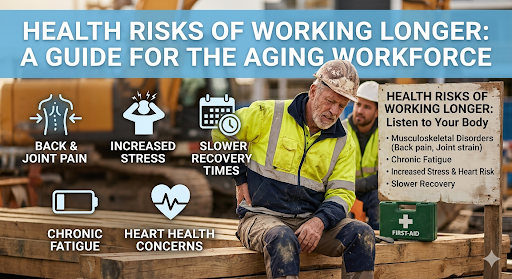
One warning. That same review linked physical activity done as part of a job to a 20% higher risk. Heavy, repetitive work with little control over your day may be the problem. So if you do want part-time work after retirement, choose something that makes you think, puts you among people and that you enjoy.
The money side. Once you reach State Pension age, you stop paying employee National Insurance, although income tax still applies. If you do not need your State Pension yet, it grows by around 5.8% for every year you defer it. See GOV.UK on deferring your State Pension. Earnings can also affect Pension Credit, so check before you start.
7 Hobbies for Retirees That Keep Your Brain Busy
The best activities combine three things: learning something new, using your hands or body, and being around other people. These tick several boxes at once:
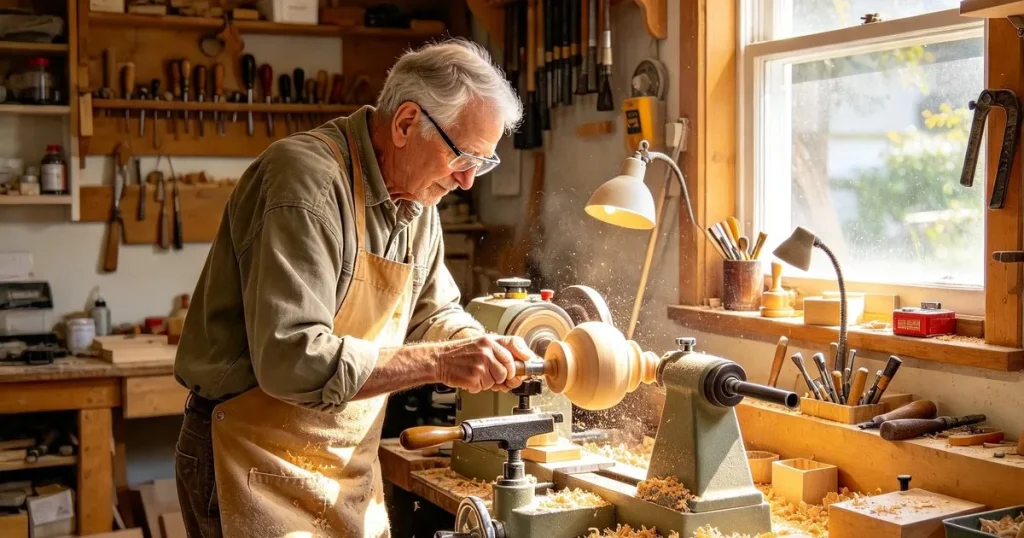
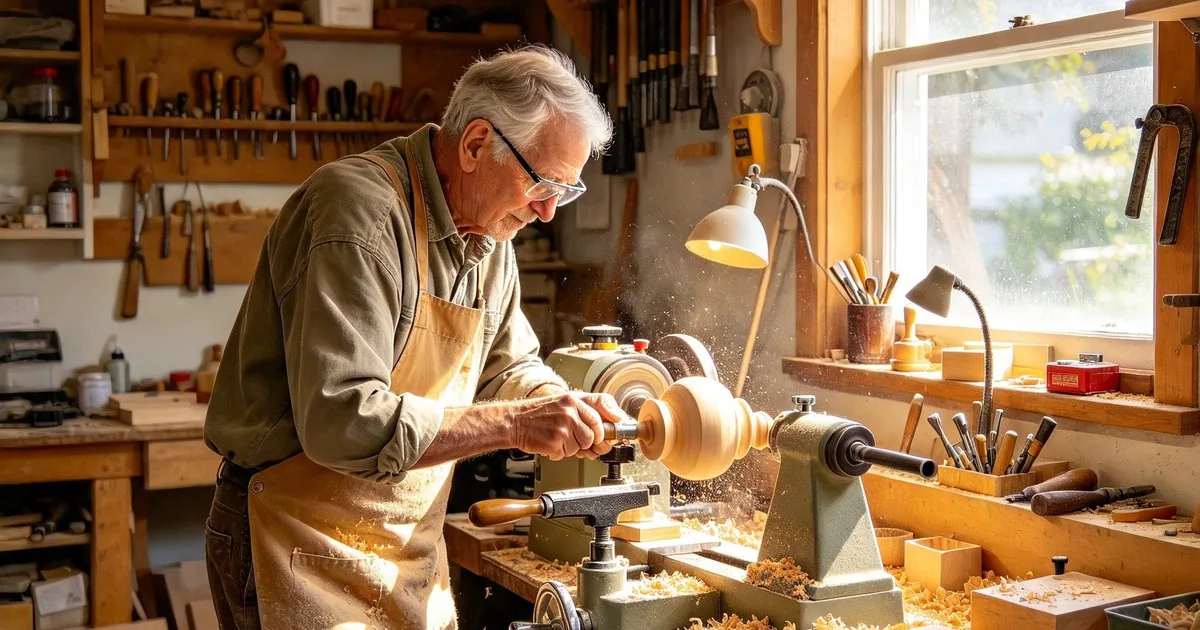
- Wood turning: real concentration, and you have something to show for it. Many clubs lend beginners a lathe.
- Pottery and stained glass: creative, hands-on and usually taught in small, friendly classes.
- Model railways: wiring and track planning are proper problem-solving, and clubs run all over the UK.
- Learning a language or instrument: few things work your brain harder.
- Volunteering: a charity shop, hospital or heritage railway gives routine and plenty of conversation.
- U3A groups: low-cost, member-led groups on almost anything, with no exams.
- Walking groups and dancing: both get you moving and chatting, and remembering dance steps works your memory too.
Not sure where to start? Begin with one regular commitment a week, then add a second once it feels normal. Use skills from your working life: a former bookkeeper could help a small charity with its accounts. To find groups, try your library noticeboard, your council’s adult education courses, local Facebook groups for your town, or search your hobby plus your town, such as “wood turning club Warrington”. If you meet someone from an online group, choose a public place.
Do not pick a hobby because you feel you should. Pick the one you will still be turning up to in two years’ time.
How to Lower Your Dementia Risk After Retirement This Week
A major 2024 report in The Lancet found that nearly half of dementia cases could, in theory, be prevented or delayed by tackling 14 risk factors. Many are easy to act on:
- Get your hearing checked. Hearing loss is one of the biggest risk factors, and many opticians test hearing for free.
- Book your free health check. If you are 40 to 74 in England, see our guide to Free NHS Health Checks.
- Get your eyes tested and keep blood pressure and cholesterol in check.
- Eat well and move more. Our guide to eating well on a pension has budget-friendly ideas.
- Stay social. Loneliness is a risk factor in its own right.
None of these steps is expensive, and together they do far more to reduce dementia risk after retirement than any single headline.
If you are worried about your own memory or someone close to you, this short film from Alzheimer’s Society explains the common early signs.
While you are well, it is also sensible to set up a Lasting Power of Attorney. The NHS has a clear page on how to reduce your risk of dementia.
The Evidence for the Effect of Retirement on the Brain
For anyone who likes to check the detail, here is what I found when I read the paper, The transition to retirement and dementia risk, published online on 9 October 2026.
What the TV Report Did Not Tell You
- It has not been peer reviewed yet. It is a “preprint”, shared before other scientists have checked it.
- “Two days a week” is not in the findings. It talks about “sustained part-time employment”.
- It is 38% lower odds, not a 40% better chance. For any one person, the real difference is much smaller than it sounds.
- Healthy people are the ones who keep working. People who left work through disability had higher dementia odds, so good health may explain some of the link.
- It shows a link, not proof. Like most research of this kind, it cannot show that working causes lower dementia risk after retirement.
What a Cognitive Abilities Synthesis of the Evidence Shows
This is not the first study on the impact of retirement on thinking skills. The UK’s Whitehall II study of civil servants found verbal memory declined 38% faster after retirement. Taken together, the research suggests a link worth acting on, but it does not prove that working itself protects the brain.
The Honest Pensioner verdict. This study does not say you must work two days a week until you drop. It suggests that easing gradually out of work, rather than stopping dead, is linked to lower dementia risk after retirement. If you enjoy a little part-time work, it may be doing you more good than the money. If not, spend those two days on something that challenges you, gets you out of the house and puts you among people. Wood turning counts. So does the choir, the allotment and the model railway.
Frequently Asked Questions
Does working after retirement prevent dementia?
Not proven. A 2026 US study linked long-term part-time work to 38% lower odds of dementia, but healthier people are more likely to keep working.
How many days a week should I work to lower my dementia risk after retirement?
The study did not set a number. The “two days a week” figure came from media coverage, not the findings.
What hobbies are best for brain health?
Ones that combine learning something new, using your hands or body, and mixing with people, such as wood turning, dancing or volunteering.
Should I delay my retirement to protect my brain?
Not on the strength of this study. Retiring earlier or later from full-time work made little difference.
Do I pay National Insurance if I work after State Pension age?
No. Employees stop paying National Insurance once they reach State Pension age, although income tax still applies.
Further reading: Alzheimer’s Society