

If you’re thinking about a mortgage after 55, you might assume the door is already closing. It isn’t. Whether you want to move somewhere smaller, relocate closer to family, or simply fancy a change of scene in retirement, a mortgage after 55 is achievable for a great many people — you just need to know where to look.
Lenders haven’t abandoned older borrowers. The range of products designed specifically for buyers in their 50s, 60s and beyond has grown considerably in recent years, and a mortgage after 55 no longer has to mean settling for whatever a high street bank happens to offer.
The right choice for you will depend on your income, how much deposit or equity you have, and how long you want the loan to run. Here are seven genuine options worth exploring.
1. A standard repayment mortgage with a shorter term
Most lenders still offer standard repayment mortgages to people over 55 — the main difference is usually the term length. Rather than the traditional 25 years, you might be offered 10, 15 or 20 years, depending on your age and the lender’s upper age limit for when the mortgage must be repaid.
If you have a reliable pension income and aren’t looking to borrow a large amount, this remains the simplest and often cheapest route to a mortgage after 55. The shorter term means higher monthly payments than a 25-year deal, but you’ll also pay considerably less interest overall.
2. A mainstream lender with an extended age limit
A growing number of building societies and specialist lenders have stretched their age limits well beyond the traditional cut-offs. Some will accept applications up to age 80, with the mortgage running until you’re 85 or even older, provided the repayments are affordable.
This matters because it widens your choice considerably. Two people of the same age, applying for the same amount, might find one lender says no while another — one that specialises in lending to older borrowers — says yes. A broker who covers the whole of the market is the quickest way to find out which lenders fall into this category. If you already own a home and are coming to the end of a deal rather than buying, our guide to remortgaging in retirement covers that situation in more detail.
3. A retirement interest only mortgage

This type of mortgage, often shortened to RIO, is designed specifically for older borrowers. You pay only the interest each month — often a much smaller sum than a repayment mortgage — and the loan itself is repaid when the property is eventually sold, usually when you move into long-term care or pass away.
Because there’s no fixed end date, age limits work differently, and approval is based on your retirement income being enough to cover the interest indefinitely. MoneyHelper’s guide to this type of later-life lending explains how these compare with standard deals and lifetime mortgages.
4. A part-and-part mortgage
A part-and-part mortgage splits your borrowing between repayment and interest-only. You pay down a portion of the capital each month, while the rest sits as an interest-only balance to be cleared later — often from savings, investments, or the eventual sale of the property.
This can strike a useful balance for a mortgage after 55: lower monthly payments than a full repayment mortgage, but with at least some of the capital being repaid along the way rather than the whole amount rolling over to the end.
5. A joint mortgage with family
If your income alone doesn’t quite stretch far enough, some lenders allow an adult child or other family member to be added to the mortgage application — sometimes called a joint borrower arrangement — while you remain the sole owner of the property. Their income can help meet affordability requirements without giving them a stake in your home.
This route can open up a mortgage after 55 that wouldn’t otherwise be available, but it’s worth thinking through the practicalities — including what happens to the arrangement and to your estate down the line. Our guide to making a will in retirement is a useful companion read if you’re considering this option, particularly if family members are contributing financially.
6. Older Persons Shared Ownership
Older Persons Shared Ownership, or OPSO, is a government scheme available to people aged 55 and over. You buy a share of a property — typically up to 75% — and pay a subsidised rent on the remainder, which means a smaller mortgage and a smaller deposit than buying outright.
It’s designed for exactly this stage of life, with properties often built with later-life living in mind. GOV.UK’s guide to Older Persons Shared Ownership sets out the eligibility rules, including income limits and which providers offer it in your area.
7. A lifetime mortgage
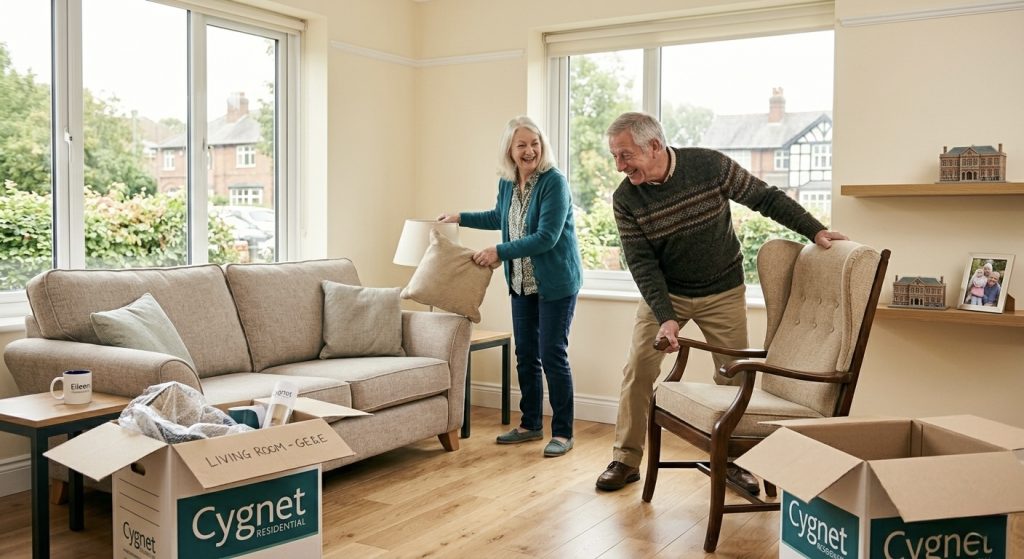
A lifetime mortgage, a form of equity release, lets you borrow against the value of a property with no monthly repayments — interest rolls up and is repaid, along with the loan, when the property is sold. For some people, this can be used to help fund a house purchase, particularly when downsizing still leaves a shortfall.
It’s generally considered a last resort rather than a first choice, because the rolled-up interest can significantly reduce the value left in your estate, and it may affect entitlement to means-tested benefits. MoneyHelper’s guide to equity release explains how lifetime mortgages compare with the other options here.
Getting ready to apply for a mortgage after 55
Whichever route looks most promising, a little preparation goes a long way. Lenders will want to see proof of your income — the State Pension, workplace pensions and annuities are generally viewed favourably, while income from drawdown or a SIPP may need a specialist lender.
It’s also worth checking your credit report for errors before you apply, and having a clear idea of your deposit or the equity you’ll have available from selling your current home. The more of this you can pull together in advance, the smoother the whole process tends to be.
Always take professional advice first
With so many routes to a mortgage after 55 — standard, RIO, part-and-part, shared ownership, or equity release — a whole-of-market adviser who specialises in later-life lending can save you a great deal of time and won’t charge for an initial conversation. MoneyHelper’s guide to finding a mortgage adviser is a good place to start if you’re not sure who to approach. Whichever option you’re leaning towards, take advice before you commit — these are significant decisions that can affect your income, your benefits, and what you leave behind.
Frequently asked questions
Can I still get a mortgage at 55 years old?
Yes. Fifty-five is far from too late. Many lenders are comfortable offering mortgages to people in their 50s, 60s and beyond, particularly where there’s a clear, affordable repayment plan based on pension or other retirement income.
What is the over 55 mortgage scheme?
There isn’t one single ‘over 55 mortgage scheme’ — rather, it’s an umbrella term often used to describe the range of products aimed at this age group, including retirement interest-only mortgages, lifetime mortgages, and schemes like Older Persons Shared Ownership.
What is the average mortgage of a 55 year old?
This varies enormously depending on income, deposit, and whether someone is buying for the first time, downsizing, or releasing equity from a previous home. Rather than focusing on an average, it’s more useful to work out what’s affordable based on your own retirement income — a whole-of-market adviser can help with this.
Can I get a 30-year mortgage at 55?
It’s possible, but it depends entirely on the lender. A 30-year term taking you to age 85 sits at the upper end of what even specialist later-life lenders will consider, and you’d need to demonstrate that repayments remain affordable throughout. For most people, a shorter term — or one of the alternative options above — tends to be a better fit.
The bottom line
A mortgage after 55 isn’t the long shot many people assume. Between standard repayment deals with shorter terms, mainstream lenders with extended age limits, retirement interest-only mortgages, and schemes like shared ownership, there’s likely to be a genuine option that fits your circumstances.
The key is knowing which doors are actually open to you — and that’s where a conversation with a later-life mortgage specialist, rather than a quick look at your existing bank’s website, tends to make all the difference.