Key Takeaways
- Learning how to spot a scam starts with the pattern: unexpected contact, a crisis, pressure, then a demand for money or details.
- Spelling mistakes are no longer a reliable giveaway. Fraudsters now use AI to write polished messages and even copy voices.
- No genuine bank, HMRC officer or police officer will ever ask you to move money to a “safe account”.
- Stop, check and call back on a number you found yourself. Ten minutes of caution beats any deadline.
- If you have been caught out, ring your bank on 159 straight away. Most bank transfer scam victims are now entitled to a refund.
A text about a parcel. A call from “your bank”. A friendly message from someone you met online. Every scam wears a different disguise, but underneath, almost all of them follow the same script. Once you know how to spot a scam by its pattern rather than its costume, you will catch the new ones too, including the ones nobody has warned you about yet.
I spent around 15 years as a mortgage broker and consumer finance consultant, and these days I also deliver parcels around the North West with my wife. Between the two, I have seen fraud from both ends: the paperwork side and the doorstep side. The lesson is the same either way. Scammers are not clever because their stories are good. They are clever because they know how to stop you thinking. Much of how to spot a scam comes down to noticing when that is happening.
I learned this the hard way. I needed to send some cryptocurrency to a company, and because details are easier to read on a computer than on my phone, I searched for the company on Google instead of using the app. The website I clicked on looked exactly right, so I carried on and made the transfer. The moment it went through, I realised it was a fake copy of the real site. That mistake cost me £4,000. No one contacted me and no one put me under any pressure. I went looking, and the scammers were waiting. That is why learning to spot a scam is not only about dodgy calls and texts. It can happen to anyone!
This guide on how to spot a scam gives you seven red flags to look out for, a simple three-step check you can use on any call or message, and a clear plan for the first hour if something does get through.
Table of Contents
Why Scams Are Harder to Spot in 2026
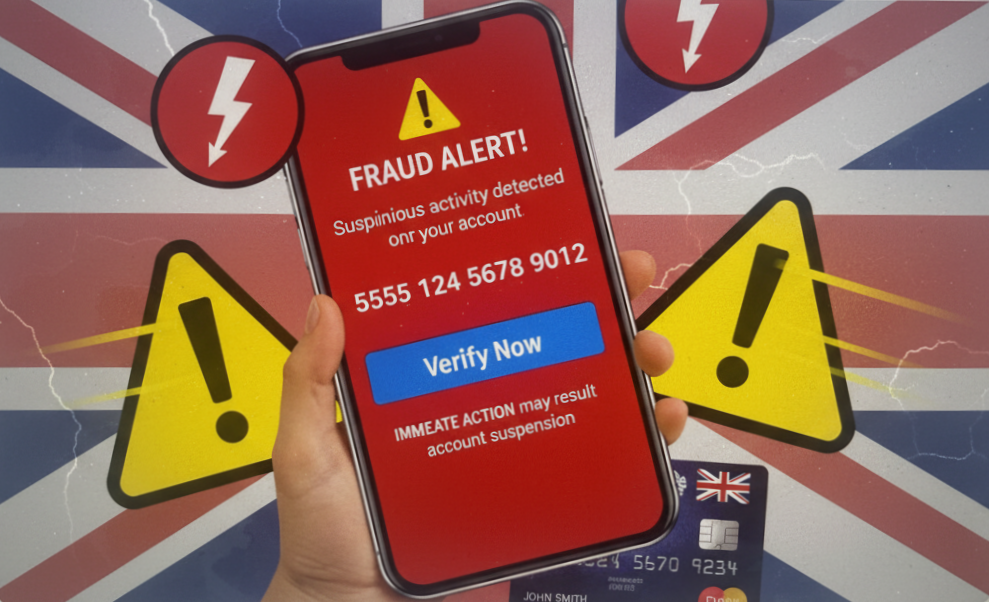
Not long ago, the advice was simple: look for bad spelling, a strange email address or a foreign accent. Those old rules on how to spot a scam are now out of date, and following them can give you false confidence.
- Messages look professional. Criminals use AI tools to write texts and emails that read exactly like the real thing, logos and all.
- Voices can be copied. A few seconds of someone talking on social media can be enough to clone a voice. Read more in our guide to AI scams targeting UK pensioners.
- Phone numbers can be faked. Your phone might show your bank’s genuine number when a criminal is on the line. This is called spoofing.
So knowing how to spot a scam today is less about checking the details of a message and more about recognising the behaviour behind it.
How to Spot a Scam: 7 Red Flags Every Fraud Shares
One red flag on its own might be innocent. The real skill in how to spot a scam is noticing when two or more turn up together.
1. It Came to You Out of the Blue
Genuine organisations rarely contact you unexpectedly and ask you to act. Scammers have to, because you would never go looking for them. Cold calls about your pension have been banned in the UK since 2019, so any unexpected call about your pension pot is a scam by definition. Our guide to pension scams in 2026 covers the most common ones.
2. There Is a Clock Ticking
“Your account will be frozen today.” “Your parcel will be returned in 24 hours.” “Bailiffs are on their way.” Urgency is the scammer’s most powerful tool, because a rushed person does not stop to check. Real problems can almost always wait while you make a phone call.
3. Your Emotions Are Doing the Talking
Fear, excitement, sympathy and love are all used deliberately. A prize you never entered, an investment with “guaranteed” returns, a grandchild in trouble, or a new online friend who suddenly needs help with a bill. If a message makes your heart race, that is exactly the moment to slow down.
4. They Want You to Move Money
Sooner or later, nearly every scam asks you to pay. Watch for requests to make a bank transfer, buy gift cards or vouchers, send cryptocurrency, or move your savings to a “safe account”. No genuine bank or police force will ever ask you to do that last one. Our article on bank scams UK explains how safe account fraud works.
5. They Ask for Codes, PINs or Passwords
The one-time passcode your bank texts you is the key to your account. Anyone who asks you to read it out, whatever reason they give, is trying to get in. Your bank will never ask for your full PIN or password either.
6. They Want You to Keep It Secret
“Don’t tell the staff at the branch, they may be involved.” “Don’t mention this to your family yet.” Secrecy cuts you off from the people most likely to spot the problem. It is the hallmark of courier fraud, where a fake detective persuades victims to hand over cash or cards.
7. The Payment Doesn’t Match the Story
HMRC does not take payment in supermarket vouchers. A solicitor’s client account will not be in a private individual’s name. A genuine seller on a marketplace will not insist you pay by bank transfer outside the website. When the payment method does not fit the person asking, believe the payment method.
The quick rule: if someone you did not expect to hear from is rushing you to send money or share details, treat it as a scam until you have proved otherwise.
How to Spot a Scam in Three Steps: Stop, Check, Call
You do not need to be a detective. You just need a routine you use every single time, even when the call seems genuine. It mirrors the national Take Five to Stop Fraud campaign.
- Stop. Hang up, close the message, or tell the person at the door you will call them back. Nothing genuine falls apart because you took ten minutes.
- Check. Find the contact details yourself: the number on the back of your bank card, a letter you already have, or the official website typed into your browser. Never use a number or link from the message itself.
- Call. Ring the organisation on that number. If you can, use a different phone, because some criminals keep the line open after you hang up. Or call 159, a free service that connects you safely to most major UK banks. You can also run it past a family member or friend first.

What Your Bank, HMRC and the Police Will Never Ask You to Do
Print this list and keep it by the phone. If anyone asks for any of these things, you are talking to a criminal. Knowing this list by heart is one of the quickest ways to learn how to spot a scam.
- Move money to a “safe” or “holding” account
- Read out a one-time passcode, your full PIN or your password
- Send a courier to collect your cash, bank cards or gold
- Pay with gift cards, vouchers or cryptocurrency
- Download an app that lets them see or control your screen
- Keep the conversation secret from your family or bank staff
How to Spot a Scam Before It Even Reaches You
The best defence is making yourself a harder target in the first place. These steps take an afternoon and cost nothing.
- Never search for a site you are about to pay. Fake websites can appear near the top of search results, sometimes as paid adverts. Use the official app, or a bookmark you saved yourself, and check the web address letter by letter before you enter any details or send money.
- Register with the Telephone Preference Service. It cuts down legitimate sales calls, so an unexpected caller stands out more.
- Agree a family safe word. If a “grandchild” calls in a panic asking for money, ask for the word. A voice clone will not know it.
- Turn on two-step verification for your email and online banking. Your email account is the master key to everything else.
- Check before you invest. Look up any firm on the FCA register and the FCA ScamSmart warning list before you hand over a penny.
- Forward scam texts to 7726 and suspicious emails to report@phishing.gov.uk. It is free and helps shut the senders down.
- Ask your bank about extra protection, such as lower daily transfer limits or alerts on large payments.
For the most common text and phone tricks, see our guides to the parcel delivery text scam and phone scams UK.
What to Do If You Think You Have Been Scammed
Knowing how to spot a scam afterwards is still valuable, because speed makes a real difference. The first hour matters most.
- Call your bank immediately on 159 or the number on your card. Banks can sometimes freeze a payment before it leaves the system.
- Change your passwords, starting with your email, then online banking. If you have given out card details, ask for the card to be cancelled.
- Report it to Report Fraud online or on 0300 123 2040 if you live in England, Wales or Northern Ireland. Report Fraud replaced Action Fraud in December 2025, so old links now redirect there. In Scotland, call Police Scotland on 101.
- Keep the evidence. Screenshot texts, note phone numbers and write down times and amounts while they are fresh.
- Watch for a second scam. Anyone who contacts you offering to “recover” your money for a fee is almost certainly the same criminals coming back.
Can You Get Your Money Back?
If you were tricked into sending a bank transfer, you are probably better protected than you think. Since October 2024, banks have had to refund most victims of this type of fraud, known as authorised push payment (APP) fraud.
- Refunds cover up to £85,000 per claim for payments made by Faster Payments or CHAPS.
- This is separate from the FSCS limit that protects your savings if a bank fails, which rose to £120,000 in December 2025.
- Most refunds should arrive within five working days of your claim.
- You must report it to your bank within 13 months of the payment.
- Your bank can deduct a small excess, but not if you are considered vulnerable.
An independent review published in July 2026 found that the share of APP scam losses refunded rose from 54% to 65% after the rules came in. The rules are under review and are moving to the FCA, so check the latest position with your bank. If your bank refuses a refund, you can complain to the free Financial Ombudsman Service. Card payments have separate protection through chargeback and Section 75.
Don’t Let Embarrassment Win
Many people who are scammed never tell anyone, because they feel foolish. That silence is exactly what criminals rely on. These are organised gangs who do this all day, every day. Being targeted says nothing about your intelligence, and anyone can learn how to spot a scam.
Talk about scams with your friends, your neighbours and your family. Share this article. The more people know how to spot a scam, the less money the criminals make. For the bigger picture, read our guide to the scams targeting pensioners in the UK right now.
Frequently Asked Questions
What is the easiest way to learn how to spot a scam?
The easiest way to spot a scam is to look for the combination of unexpected contact, urgency and a request for money or personal details. If all three are present, stop and check independently before doing anything.
How can I help an older parent learn how to spot a scam?
Share the seven red flags with them, agree a family safe word, and print the “never ask” list for beside the phone. Most of all, make it easy for them to ring you before they act. Knowing how to spot a scam is easier when nobody feels embarrassed to ask.
Can a scammer fake my bank’s phone number?
Yes. Criminals can make your phone display a genuine number, including your bank’s. Never trust caller ID alone. Hang up and call back on the number on your card or call 159.
Is Action Fraud still running?
No. Action Fraud was replaced by Report Fraud, run by the City of London Police, in December 2025. You can report at reportfraud.police.uk or on 0300 123 2040.
Will my bank refund me if I have been scammed?
If you were tricked into sending a bank transfer, your bank must usually refund you up to £85,000, provided you report it within 13 months and were not acting with gross negligence.
Are scam texts always full of spelling mistakes?
Not any more. Many scam messages are now written with AI tools and look completely professional. Judge a message by what it asks you to do, not how well it is written.
Final Word on How to Spot a Scam
You will never memorise every scam out there, and you do not need to. Learn how to spot a scam by its pattern: the surprise contact, the pressure, the emotion and the demand. Then use the same simple routine every time: stop, check, call. Criminals count on you rushing. Taking ten minutes is the most powerful protection you have.
Want scam alerts sent straight to your inbox? Sign up to the Honest Pensioner newsletter below.