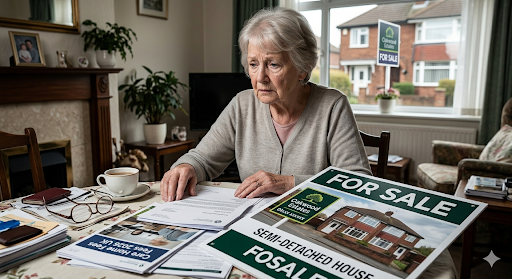
Do I have to sell my house to pay for care? It is the first question most families ask when a care home comes into the conversation, and the answer is often no, or at least not straight away.
Your home only counts towards care home fees in certain situations. Even when it does count, there are legal protections, payment schemes and exemptions that can buy you time, keep the property in the family, or stop it being counted at all.
I spent around 15 years as a mortgage broker and consumer finance consultant, advising families on property, wills and later-life money. This guide sets out the seven facts I would want every family to know before putting a house on the market to pay for care. Figures are for England in 2026/27. The rules are different elsewhere in the UK. If you live in Scotland, see our guide to care home fees in Scotland and care home fees in Wales.
Care is expensive. Residential care averages around £1,300 a week and nursing care around £1,600, so it is easy to see why the house comes up so quickly. For a full breakdown of fees, see our guide to care home costs in the UK.
1. Your Home Only Counts If You Move Into a Care Home Permanently
If you receive care in your own home, the value of your property is never included in the council’s financial assessment, however much it is worth.
The same applies to temporary and respite stays in a care home. As long as you intend to return home, your property is ignored.
That is why staying at home for longer can make a real financial difference. If adaptations would help, read our guide to the Disabled Facilities Grant
2. The First 12 Weeks in a Care Home Are Protected
When you first move into a care home permanently, the council must ignore the value of your home for the first 12 weeks. This is called the 12-week property disregard.
It applies if your savings and other assets, not counting your home, are below £23,250 and your income is not enough to cover the fees. During those 12 weeks the council helps with the cost and you contribute from your income.
After 12 weeks, your home is included in the means test unless one of the exemptions in Fact 3 applies. Even then, you do not have to sell straight away. You can ask for a Deferred Payment Agreement, rent the property out, or sell if that is what you want to do.
3. Your Home Is Ignored If Certain People Still Live There
Your home is not counted in the means test at all, for as long as any of these people live there as their main home:
- Your husband, wife, civil partner or partner
- A former partner or civil partner who is a lone parent
- A relative aged 60 or over
- A relative under 60 who is incapacitated
- A child of yours under 18
“Relative” covers a wide group, including brothers and sisters, children and grandchildren, aunts, uncles, nephews, nieces and in-laws. The person usually needs to have lived there since before you moved into care.
4. A Deferred Payment Agreement Means You Don’t Have to Sell Your House
A Deferred Payment Agreement (DPA) is one of the most useful and least publicised options. The council pays your care home fees, and the amount builds up as a debt secured against your home. It is repaid when the property is sold, either during your lifetime or from your estate. It means you do not have to sell your home to pay for care during your lifetime.
Your council must offer a DPA if:
- You are moving into a care home permanently
- Your savings and other assets, not counting your home, are below £23,250
- Your home is not already exempt from the means test
Councils can charge interest and administration fees. Interest is capped at a national maximum rate that is reviewed every six months, so ask for the current rate and all fees in writing before you sign. You will usually need to keep the property insured and maintained.
Councils are required to tell eligible people about DPAs, but in practice families often have to ask. If you are thinking “do I have to sell my house to pay for care?”, this should be the first thing you ask about.
Renting Out Your Home Instead
Some families rent the home out rather than selling. The rental income counts towards your fees, but you keep the property. Renting can also be combined with a DPA, which reduces the debt building up against the home.

5. Selling Your Home Doesn’t Mean Losing Everything
If you do sell and pay for your own care, you will not be left with nothing.
- Above £23,250: you pay the full cost of your care and are classed as a self-funder
- Between £14,250 and £23,250: you pay from your income plus £1 a week for every £250 of capital over £14,250
- Below £14,250: your capital is ignored and you contribute from your income only
These limits have not changed since April 2010. If the council helps fund your care, you keep a Personal Expenses Allowance of £31.80 a week for 2026/27.
6. NHS Continuing Healthcare Isn’t Means-Tested
If your needs are mainly health needs, you may qualify for NHS Continuing Healthcare (CHC). The NHS pays the full cost of your care, including care home fees, and there is no means test. Your home and savings are not considered.
Eligibility is based on health need, not money. Ask your GP, hospital team or social worker for a CHC checklist assessment as early as possible. Never assume someone will not qualify.
If you do not qualify but need care in a nursing home, the NHS still pays a weekly contribution towards the nursing part of your fees. This is called NHS-funded Nursing Care.
7. Giving Your House Away to Avoid Care Fees Can Backfire
Transferring your home to your children to avoid care home fees is known as deprivation of assets. If the council decides that avoiding care fees was a significant reason for the transfer, it can treat you as though you still own the property.
There is no fixed time limit. The seven-year rule people often mention applies to inheritance tax, not care fees. The council will look at when the transfer happened and whether you could reasonably have expected to need care at the time.
Planning through your will, such as leaving your share of the home in trust, is treated differently from giving it away during your lifetime. Always get specialist legal advice. See our guides to how to protect your home from care home fees and making a will .
It is also worth setting up a Lasting Power of Attorney early, so someone you trust can deal with the property or a DPA if you are no longer able to.
Selling Your Parents House? What to Do First
Paying for care is complicated, so do not panic, and do not make any decisions about the property until you have the facts.
- Request a care needs assessment from your local council under the Care Act 2014. It is free and it is the starting point for everything.
- Ask for a financial assessment so you know exactly where you stand on the means test.
- Check whether anyone living in the home makes it exempt, and raise any discretionary reasons too.
- Ask specifically about a Deferred Payment Agreement if your home will be counted.
- Ask for an NHS Continuing Healthcare checklist assessment.
- Get independent advice from a specialist later-life adviser or solicitor before selling, renting or transferring the property.
If you are still weighing up whether a care home is the right move, compare the options in Sheltered Housing vs Care Home Costs .
Frequently Asked Questions
Can the council force me to sell my house to pay for care?
No. The council cannot make you sell your home during your lifetime. But if your home counts in the means test, the fees still have to be paid. A Deferred Payment Agreement lets the council pay now and recover the money when the home is eventually sold. If fees go unpaid without an agreement in place, the council can take steps to recover the debt, which can include placing a legal charge on the property.
What happens if my house is jointly owned?
Only your share is counted. The council should value it at what a buyer would realistically pay for that share, which can be very little if the other owner lives there and does not want to sell. If your partner lives in the home, it is ignored completely.
Can I give my house to my children to avoid care home fees?
You can, but it may not work. If the council decides you gave it away to avoid care fees, it can treat you as still owning it. There is no time limit, and the seven-year rule only applies to inheritance tax.
The Bottom Line
Having to sell the family home is far from automatic. Your home may be exempt from the means test altogether, protected for the first 12 weeks, or covered by a Deferred Payment Agreement so it never has to be sold in your lifetime. NHS Continuing Healthcare could remove the question entirely.
The families who lose most are usually the ones who act in a hurry. Get the assessments done, ask the right questions and take advice before you put the house on the market.
For free, independent guidance, see the MoneyHelper care funding guide and Age UK’s care home fees advice, or the Care and support statutory guidance on GOV.UK.
Disclaimer: This article is for general information only and does not constitute financial or legal advice. Care funding rules vary between councils and across the UK, and individual circumstances differ. Always seek independent advice before making decisions about care funding or property.