An emergency kit is the talk of the radio and TV stations this week – the government wants every household in the country to have one. Its new Be Ready campaign, launched on 22 October, asks us all to manage on our own for three days if the power goes off, the cash machines stop working or a cyber attack takes down the services we all rely on.
It is sensible advice, not scaremongering. But most of what you will read is written for young families. If you are over 60, your emergency bag needs a few extra things, and there are traps – like the new digital landlines – that hardly anyone mentions.
Table of Contents
Why Everyone Is Talking About an Emergency Kit
In April 2025 a blackout cut power across Spain and Portugal. Phones stopped working, card machines went dead and trains stopped where they stood. Spain was not fully switched back on for almost 16 hours.
On 22 October the Cabinet Office launched the Be Ready campaign, the first stage of a three-year push you will hear on the radio over the coming weeks. The same day, Defence Secretary Wes Streeting warned that hostile states could target payments, supply chains, energy and water through cyber attacks – which is where the “national crisis” headlines came from.
This is not just theory. This month hackers switched supermarket freezers into defrost mode across hundreds of French stores. Days later, the owner of Albert Heijn in the Netherlands and Delhaize in Belgium took its systems offline after a separate attack. Shelves went empty, and Albert Heijn only restarted deliveries nearly two weeks later.
Yet most of us are not ready. A Cabinet Office survey this year found only 13% of households felt largely or fully prepared, and research from LINK, which runs the UK cash machine network, found just 17% keep emergency cash at home.
Keep it in proportion, though. Most UK power cuts are short and local, and you do not need a bunker. A sensible household emergency kit fits in a box under the stairs.
What Goes in Your Emergency Kit: 10 Essentials
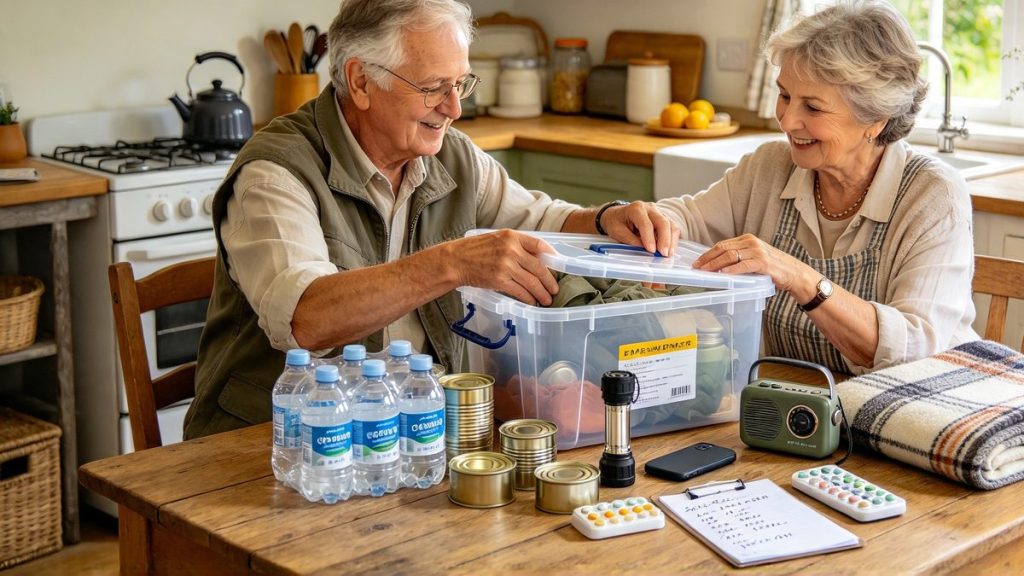
The government’s target is three days, which is why you will hear it called a 72 hour emergency kit. Check your cupboards first – you probably have half of it already.
- 1. Bottled water. Allow 3 litres per person per day for drinking. For a couple, that is 18 litres for three days – about three big six-packs. Use and replace it every few months.
- 2. Food that needs no cooking. Food should keep without a fridge: tinned fish, meat and vegetables, crackers, nuts, dried fruit and long-life milk. Buy what you normally eat, and keep a manual tin opener in your emergency kit.
- 3. A torch and spare batteries. Torches are safer than candles, especially on stairs. A head torch keeps one hand free for the banister.
- 4. A battery or wind-up FM radio. When the internet and mobile signal go, the radio is how you will hear what is happening. Write your local BBC station frequency on paper.
- 5. A charged power bank. Your mobile may be your only way to call for help. Keep a power bank and cable in your emergency kit and top it up every couple of months.
- 6. Cash in small notes and coins. Card machines and cash machines both need power. There is more on how much below.
- 7. Medication and a written list. Order repeat prescriptions up to five working days before you need them. Keep a list of your medicines and doses with spare glasses and hearing aid batteries.
- 8. Blankets and warm clothing. Homes lose heat fast when the boiler stops, and the cold hits older bodies harder. Hats, gloves and thermal layers all count.
- 9. First aid and hygiene basics. A first aid kit, hand sanitiser, wet wipes and toilet roll.
- 10. Important numbers and documents on paper. Family, neighbours, your GP, your insurer and 105, the free power cut line, plus printed copies of your ID and insurance documents. Our If Anything Happens to Me life organiser keeps all of this in one place.
Keep your emergency kit in a ground-floor cupboard you can reach in the dark – not the loft, garage or shed, where cold and damp spoil batteries and food. Build it up an item or two at a time with your weekly shop; there is no need to panic buy.
Then check it twice a year, when the clocks change. They go back this Sunday, so this is the perfect weekend to start.
How Much Cash to Keep at Home in an Emergency
Wes Streeting asked a simple question this week: how would we cope if the payment systems at the local supermarket went down? Most of us pay for almost everything by card, so the honest answer is badly.
The official advice is to keep a mix of coins and notes, with the amount depending on your household. The Netherlands, Austria and Finland are more specific, suggesting around €70 to €100 per person for 72 hours. For a UK couple, £100 to £200 in your emergency kit is a sensible starting point.
From my years as a mortgage broker and finance consultant, a few practical rules:
- Small denominations. Fives, tens and coins – the corner shop may not have change for a £50 note in a power cut.
- Check your home insurance. Most contents policies cap cover for cash, and many will not pay for cash theft unless the thief forced their way in.
- Keep it quiet. Never mention it to callers or tradespeople. Anything beyond a few days’ spending belongs in the bank – see our guide to the best savings accounts for UK pensioners.
What Happens to Your Freezer in a Power Cut?
If you have a chest freezer full of food, this matters. Government food safety guidance says a full freezer should keep food frozen for up to 48 hours, or about 24 hours if it is half full. The golden rule is to keep the lid shut – every peek lets the cold out.
If the food does spoil, check your home insurance. Many contents policies include freezer cover, sometimes up to £1,000. Common exclusions include planned power cuts, a freezer switched off by accident and, with some insurers, freezers over 10 years old. Photograph and list the food before you throw it away.
You may also be owed money by your network operator. Ofgem rules mean homes are paid £100 automatically if a normal power cut lasts more than 12 hours (24 hours if 5,000 or more homes are affected), plus £45 for each further 12 hours. There is no payment if the blackout is caused by a national power shortage.
The Digital Landline Problem in a Power Cut
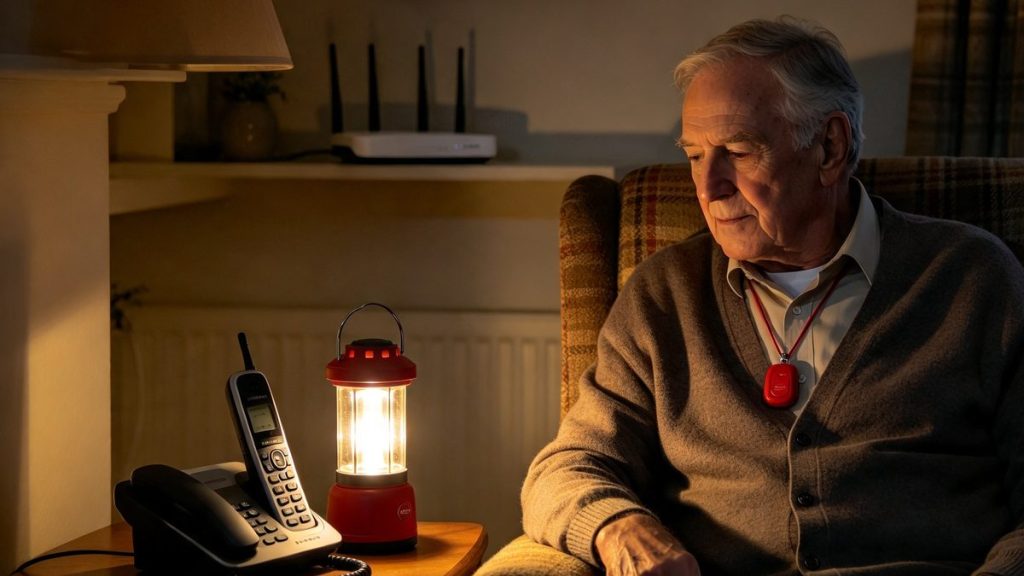
This is the one most articles miss. The old copper phone network is being switched off by the end of January 2027, and landlines are moving to digital lines that run through your broadband router. Unless it has a battery backup, your home phone will not work in a power cut.
If you or a parent rely on a telecare or pendant alarm, tell your landline provider, and ask your telecare provider whether the alarm has a battery backup or works over the mobile network. If you have no mobile or poor signal at home, your phone provider must offer a free way to call 999 during a power cut.
Scammers are using the switchover as cover – genuine providers never charge for it. Our guide to phone scams in the UK shows what to watch for.
Join the Priority Services Register – It Is Free
If you have reached State Pension age, you are eligible. According to Ofgem, joining can get you priority support in an emergency, advance warning of planned power cuts, and a password scheme so you know a caller is genuine.
Register with both your energy supplier and your local network operator, and separately with your water company. The quickest place to start is thepsr.co.uk. It will not necessarily get your power back faster, but your network operator will know you may need a check-in during a long power cut.
Emergency Kit Extras for Older Households
- Stairlifts. Many run on mains-charged batteries and keep going for a while. Ask your installer how many trips you would get – our guide to buying a stairlift covers what to ask.
- Oxygen and electric beds. Ask your supplier about backup options, learn how any manual release works, and keep printed instructions handy.
- Fridge medicines. Ask your pharmacist how long they stay safe at room temperature.
- Scam callers. Power cut compensation is paid automatically, so anyone asking for your bank details is a fraudster. If something feels wrong, read our guide on how to spot a scam.
- Neighbours. Swap numbers with the people next door and agree to knock on each other’s doors if the power goes off. The best emergency kit in the world will not replace a good neighbour.
Frequently Asked Questions
What are 10 items in an emergency kit?
An emergency kit should include water, food that needs no cooking, a torch, a battery or wind-up radio, a charged power bank, cash, medication, warm clothes, a first aid kit, and important numbers and documents on paper.
How should I prepare at home for a national emergency?
Follow the government’s Be Ready advice: build a 72-hour emergency kit, keep some cash, join the Priority Services Register and agree a plan with family and neighbours.
How much cash should I keep at home for emergencies?
There is no official UK figure. Several European governments suggest about £60 to £90 per person, in small notes and coins.
How long will my freezer stay frozen in a power cut?
Up to 48 hours if it is full and about 24 hours if it is half full, as long as you keep the lid shut
Will my landline work in a power cut?
Not if it is a digital line without a battery backup. If you have no mobile or poor signal, your provider must offer a free solution so you can call 999.
How often should I check my emergency kit?
Every six months. Swap out food and water near their dates, charge the power bank and check the torch batteries.
The Honest Pensioner Verdict
Putting together an emergency kit is not about expecting the worst. It is the same common sense our parents had when they kept candles in the kitchen drawer. Spend an hour this weekend checking what you have, join the Priority Services Register, check your freezer cover, and if you use a telecare alarm, ring your provider. You will sleep better for it.